Operations | Monitoring | ITSM | DevOps | Cloud

Soft navigations: The future of seamless browsing

In the ever-evolving world of web standards, a new experimental feature is quietly reshaping how browsers perceive navigation: Soft Navigations. While still in the early stages, this concept has the potential to redefine user experience metrics, improve performance monitoring, and better align browsers with the behavior of modern web applications. Let’s dive into what soft navigations are, why they’re important, and how you can start exploring them today.
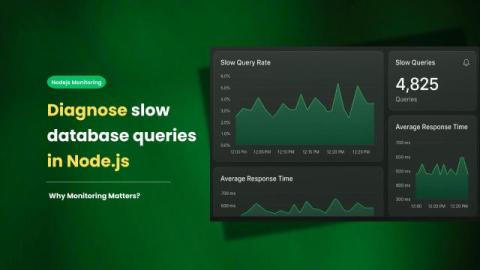
Diagnose slow database queries in Node.js: Why Monitoring is Essential?

Node.js is popular for building scalable applications because its non-blocking architecture can handle many requests at once. But when your app depends on a database, performance hinges on how efficiently queries run behind the scenes. Even a single slow database query can block the Node.js event loop, causing delayed responses, frustrated users, and cascading performance issues. Too often, teams only notice these problems after customers experience lag or timeouts.

Complete Guide to HAProxy Visibility Using Promtail and Loki

HAProxy is the workhorse in front of countless APIs and apps because it’s fast, lean, and flexible. Because it sits on the traffic hot path, it’s also your earliest warning system when something slows down or breaks entirely. This means that monitoring it isn’t optional. You need to see connection queues and retries, per-stage timings, health-check failures, and spikes in error statuses to catch incidents before users do.

How Nexus BMS Uses Time Series and AI to Power Smarter Buildings

Monitoring equipment isn’t enough for today’s smart buildings; true value comes from being able to predict issues, optimize performance, and take action automatically. Traditional building management systems often fall short, limited to dashboards and alarms that only notify you of an issue after the fact. With the rise of open source hardware, modern databases, and AI-driven diagnostics, facilities can now move from reactive to proactive management.

Monitor your data pipelines with Airflow lineage

In complex data pipelines with dozens of jobs and intermediary datasets, it can be difficult to effectively monitor how data travels and changes through various steps. When tracking issues in these pipelines, you need visibility into upstream components where the root cause may originate from, as well as downstream datasets and consumers of data that may be experiencing further impacts.

Creating a Sustainable Open Source Business Model - Introduction

Open source defies everything you’ve ever heard or learned about business before (author’s quote). Yes, open source software has been around since the 90s, but there’s still little else like it. If anything, as time has gone on, we’ve added adjacent concepts like “open core” and “source available” that have added complexity to a model that isn’t that straight forward to grasp to begin with. VictoriaMetrics is an open source company.

How to Responsibly and Effectively Contribute to Open Source Using AI

With the influx of AI tooling, it’s never been easier to contribute to open source communities. These tools are capable of gathering context quickly, “understanding” repositories faster than ever before. They provide instant summaries about repositories that, previously, would have meant reading lines and lines of code. They can fix bugs in programming languages you don’t know, and ultimately allow more contributors to get involved, which (almost) every open source project wants.

Top 3 MSP dashboards compared: SquaredUp, BrightGauge and MSPbots

Managed Service Providers (MSPs) live and die by their data. Externally, clients expect clear reporting, fast responses, and visible proof of value. Internally, smooth operations and low overheads are essential to business success. But with so many tools, key data is scattered across multiple systems – PSA, RMM, cloud services, ticketing, monitoring, finance – and that causes blind spots. Dashboards fix this problem by consolidating data into a single view.

Mute timing vs. silences in Grafana Alerting: How to pick the best fit for your use case

Have you ever been in a situation where know your team is going to run their weekly maintenance window and you silence your notifications to prevent a flood of false positives from pinging your inbox? If you are associated with a team that uses any type of alert system, you know how easily alert fatigue can happen. The incessant and unpredictable (or even, at times, predictable) pings, emails, and notification alerts can drive even the most serene worker totally batty.

What is SNMP Trap: Real-Time Alerts for Network Monitoring

Why wait for the next poll? An SNMP trap is a real-time alert sent from a device to a monitoring system, without waiting for polling. Ever had a router die silently at 3 AM while your monitoring system was still polling away every 5 minutes? Yeah… not fun. That’s where SNMP traps step in. Think of them as the push notifications of network monitoring: instant, lightweight, and sometimes misunderstood.