Operations | Monitoring | ITSM | DevOps | Cloud

Creating a Sustainable Open Source Business Model - Introduction

Open source defies everything you’ve ever heard or learned about business before (author’s quote). Yes, open source software has been around since the 90s, but there’s still little else like it. If anything, as time has gone on, we’ve added adjacent concepts like “open core” and “source available” that have added complexity to a model that isn’t that straight forward to grasp to begin with. VictoriaMetrics is an open source company.

How to Responsibly and Effectively Contribute to Open Source Using AI

With the influx of AI tooling, it’s never been easier to contribute to open source communities. These tools are capable of gathering context quickly, “understanding” repositories faster than ever before. They provide instant summaries about repositories that, previously, would have meant reading lines and lines of code. They can fix bugs in programming languages you don’t know, and ultimately allow more contributors to get involved, which (almost) every open source project wants.

Top 3 MSP dashboards compared: SquaredUp, BrightGauge and MSPbots

Managed Service Providers (MSPs) live and die by their data. Externally, clients expect clear reporting, fast responses, and visible proof of value. Internally, smooth operations and low overheads are essential to business success. But with so many tools, key data is scattered across multiple systems – PSA, RMM, cloud services, ticketing, monitoring, finance – and that causes blind spots. Dashboards fix this problem by consolidating data into a single view.

Mute timing vs. silences in Grafana Alerting: How to pick the best fit for your use case

Have you ever been in a situation where know your team is going to run their weekly maintenance window and you silence your notifications to prevent a flood of false positives from pinging your inbox? If you are associated with a team that uses any type of alert system, you know how easily alert fatigue can happen. The incessant and unpredictable (or even, at times, predictable) pings, emails, and notification alerts can drive even the most serene worker totally batty.

What is SNMP Trap: Real-Time Alerts for Network Monitoring

Why wait for the next poll? An SNMP trap is a real-time alert sent from a device to a monitoring system, without waiting for polling. Ever had a router die silently at 3 AM while your monitoring system was still polling away every 5 minutes? Yeah… not fun. That’s where SNMP traps step in. Think of them as the push notifications of network monitoring: instant, lightweight, and sometimes misunderstood.

An overview of Context Propagation in OpenTelemetry

To effectively manage modern applications, you need to understand how they work on the inside. Distributed tracing is the key to this, providing a detailed picture of a request's journey across every service. OpenTelemetry has emerged as the industry-standard framework for implementing tracing and achieving true observability in complex, distributed systems. In this article, we embark on a journey to explore the core concept of context propagation within Open Telemetry.

Two Decades of Microsoft SCOM & Monitoring Expertise

In today’s complex IT environments, reliable monitoring isn’t optional — it’s essential. From critical infrastructure in Government & Defense to highly regulated sectors like Healthcare, Energy, and Finance, organizations worldwide trust NiCE to deliver secure, future-ready monitoring solutions.

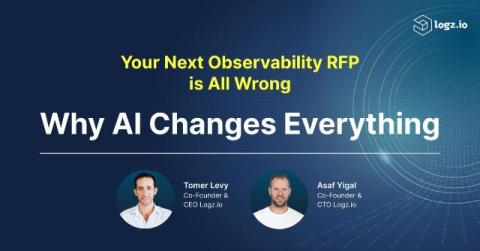
Your Next Observability RFP is All Wrong. Why AI Changes Everything

AI-first observability addresses two of the most pressing troubleshooting challenges: complex IT environments and AI-generated code. But understanding how to implement AI in a way that brings ROI, requires cutting through the hype and maintaining realistic expectations, while keeping a forward-thinking vision. In this blog post, we bring practical tips for including AI in your next observability RFP. The article is based on a webinar held with Logz.io founders, CEO Tomer Levy and CTO Asaf Yigal.

New Relic's CCU-based pricing is creating unpredictable costs, pushing teams to sample heavily

We talked to 7 companies in August 2025 who were looking to switch from New Relic. One engineering director said they're paying $1,000 a month and only ingesting 10% of their traces. Teams are defaulting to aggressive sampling, some at 1%, others at 10%, to manage costs.

Sentry AI code review, now in beta: break production less

This could’ve been prevented. This should have been prevented. This too. We all hate getting tagged in PRs. The time, the blame for when you inevitably miss something, and constant “I wouldn’t have written it that way” feeling is just hard to shake. LLMs promised this would get easier. Promised they would do it for us. But as we’ve seen, we’re not there yet. But this is what Sentry does for a living. We catch bugs… in prod.