Operations | Monitoring | ITSM | DevOps | Cloud

Decoupling Ruby: Delegation vs Dependency Injection

We've all worked with tightly-coupled code. If a butterfly flaps its wings in China, the unit tests break. Maintaining a system like this is...unpleasant. In this article, Jonathan Miles dives into the origins of tight-coupling. He demonstrates how you can use dependency injection (DI) to decouple code. Then he introduces a novel decoupling technique based on delegation that can be useful when DI is not an option.


Help! My Collector is Down: Troubleshoot in 6 Steps

At the core of the LogicMonitor solution, there is the LogicMonitor Collector. The Collector is a small Java app installed on servers in your environment that collects monitored data from your various devices and then sends that data to LogicMonitor for retention and display. The Collector is what connects your environment to the cloud and allows you access from anywhere. However, sometimes these Collectors can go down, potentially leading to gaps in monitoring.

January 2020 Outage Report

Welcome to 2020, where Google Drive can fail for some of you but not others, you can’t access your passwords, and you can’t withdraw cash on vacation. This stranded on a desert isle dream was reality in the month of January, which saw drama in the financial services and internet infrastructure sectors. January’s downtime reinforces just how connected we have become, and how reliant we are on infrastructure that can seemingly fail on a whim.

Everything You Need to Know About the Splunk Plugin for Grafana

Last week on Slack: Eldin: Hey Christine, do you remember the first time you viewed a log file? Christine: Oh yes. I used Splunk as a support engineer and I remember. You? Eldin: I believe it was early 2000s. I was installing Slackware and a few network cards for a DIY router, and logs were critical. Hello again! We are Eldin and Christine from Solutions Engineering – a team at Grafana that is passionate about connecting people to our products – reporting back for duty.

Dump Them for Sentry, Before They Can Break Up with You

Your customers are messaging, ordering, watching on a mobile device and — without a pause — carrying that experience to the web, desktop, tv, smart speaker, etc. Their expectations are that your service provides one seamless experience that goes with them where ever they are. That’s why you need resolution tools that work across organizational and technical boundaries. Now, maybe you’re tired of using an additional mobile focused tool when Sentry can cover both cases.

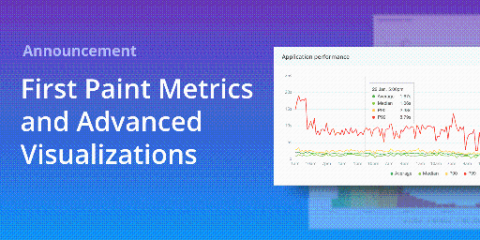
Announcing: First Paint Metrics and Advanced Visualizations

Since Real User Monitoring first launched in 2015, Raygun has helped thousands of teams identify and resolve front-end performance bottlenecks impacting their customers. Today, we’re excited to announce support for first paint and first contentful paint, along with rich new visualizations designed to help you better identify and diagnose performance problems in your software.

Beware These 5 Possible Dangers Lurking in Free Website Monitoring Tools

We’ve been told by the poets that the best things in life are free: A sunrise in spring, the scent of a flower, the coo of a baby, having a buddy who can get his hands on football tickets. It’s all so beautiful and uplifting (especially the football tickets). But at the same time, the economists remind us that there’s no such thing as a free lunch. And of course, we know from experience that this is often the case.

Citrix Monitoring in 2020

Now how many of you have better monitoring as part of your New Year’s resolution? You want to implement better monitoring into your Citrix environments, right?You want your end-users to experience less technical faults by having a system in place that allows you and the team to be more proactive. OK, probably not what you have been thinking as the clock struck midnight, but it should be part of your professional goals for 2020.

Papertrail + Python Logging = Super Powers

Design applications to be modular. It’s a software design best practice. Modular programming is writing multiple independent programs that perform a single function but work together to achieve an overarching outcome. The benefit to this design is the smaller parts can be easily created and tested. New functionality can be slipped into the larger whole without interfering with other functions.

Azure Monitor (Part 2): Azure Monitor Logs-Getting Started

In our previous post, we discussed the question: 'What is Azure Monitor and how does it work?' and also covered the two types of data it stores, at a high level. In this part, we will get ourselves started with Azure Monitor Logs. More specifically, we'll discuss how Logs are collected by Azure Monitor or, in other words, what options you have to add data sources to Azure Monitor so you can display that data in a way that makes sense to you.