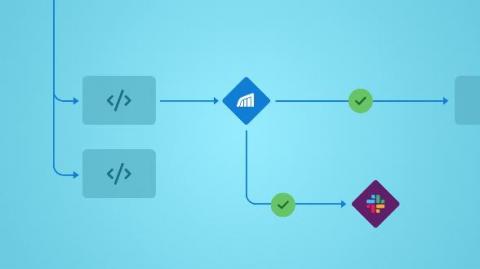
At Rollbar we love workflow automation. With our new Notifications API, you can automate setting up of custom notification rules for all your Rollbar projects. As more of our customers switch to microservices, we wanted to build a programmatic way to set up these rules for multiple projects or services in just a few seconds, without having to go to the UI.
We’re delighted to introduce you to guest blogger Gabriel Mora, a Microsoft Certified Azure Administrator who has worked on multiple migration projects using Azure Site Recovery and other third-party tools like Zerto and Movere. By Gabriel Mora Hi everyone, my name is Gabriel Mora and today I will be giving you some tips on migrating to Azure using a few helpful tools.
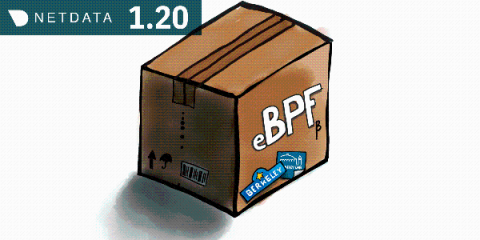
Your application isn’t finished when you’ve closed the last if block and you lined up all the brackets. There’s a whole other world of testing, debugging, and optimization that you haven’t even touched yet. To help you more safely step into that complex phase of making your application even better, we’ve just released a brand-new eBPF collector in v1.20 of Netdata.
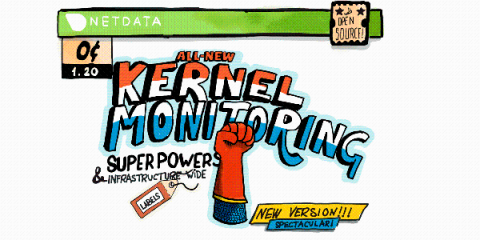
In Netdata’s first major release of 2020, we’re introducing two new features on the opposite ends of the monitoring spectrum. On one hand, we’re releasing an eBPF collector, which lets you collect, monitor, and visualize incredibly precise metrics straight from the Linux kernel. On the other, we added the ability to label agents to help you organize entire infrastructures and see every important piece of information about streaming nodes in one place.
Log management plays an important role in helping to debug Kubernetes clusters, improve their efficiency, and monitor them for any suspicious activity. Kubernetes is an open-source cluster management software designed for the deployment, scaling, and operations of containerized applications.
Job titles are in constant flux these days, especially in the world of IT. While some can border on the bizarre and ambiguous (thinking of you, Mr. “Digital Sherpa” and “Software Ninja”) most titles reveal very specific clues about the nature of modern work and the changing demands of business. In the last few years, large enterprise companies have realized their digital employee experience is just as important as their digital customer experience.
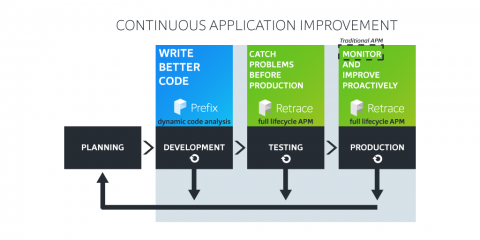
CAI stands for Continuous Application Improvement. It is a software improvement process that is implemented at each step of the SDLC, ensuring immediate feedback at each step rather than waiting till risk levels and impact has gone up. When you implement CAI you shift your improvement process as far left as possible and you catch software bugs and performance problems where they are introduced, eliminating countless hours of time spent chasing issues.
In typical San Francisco startup fashion, we have our own set of “these are the things we stand by” company values. While we don’t aspire to churning out motivational poster-style blurbs, we do want to accurately reflect what’s important to our mission and vision — the principles that drive these forward. And, ok… Yes, these will likely end up on a poster of sorts. Just not the motivational type. And with way better design work.