Operations | Monitoring | ITSM | DevOps | Cloud

New feature: API monitoring with Custom Metrics

Imagine that your API response includes data that you would like to track and get regular reports on, and you may even want to generate alerts when values hit certain thresholds. You’re already monitoring for API performance and function, but how about grabbing the other data at the same time. Wouldn’t it be nice to capture the data, evaluate it, and store it in your Uptrends account? You can with Uptrends’ newest Multi-Step API feature, Custom Metrics.


The OpsRamp Monitor: DevOps Distress, M&As, Coronavirus & Tech

It’s Friday, and a holiday (of sorts) heading into a long weekend (for some). We’re going to start with something light, and then get a little heavier. If you like what you read here, please do share with your colleagues and pals! Share the love...of work. You may not care for the Hallmark holiday of Valentine’s Day, but why not celebrate all sorts of love on this day? Let’s start with work, where great things can happen with the right attitude.

Logging + Trace: love at first insight

Meet Stackdriver Logging, a gregarious individual who loves large-scale data and is openly friendly to structured and unstructured data alike. Although they grew up at Google, Stackdriver Logging welcomes data from any cloud or even on-prem. Logging has many close friends, including Monitoring, BigQuery, Pub/Sub, Cloud Storage and all the other Google Cloud services that integrate with them. However, recently, they are looking for a deeper relationship to find insight.

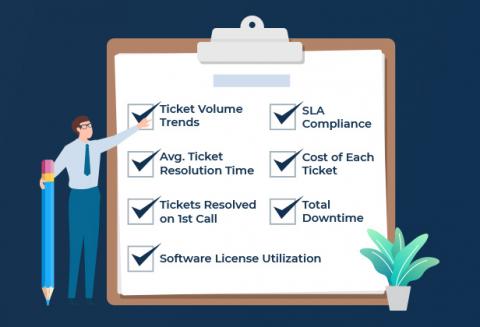
7 Important Service Desk Metrics to Measure

Service desk or IT teams are critical to organisations for ensuring business continuity and service delivery. Hence, it becomes important for IT organizations to use a slew of metrics to measure how efficient their service desk is. With the recent advancement in IT Service Management (ITSM), the reporting capabilities offer multiple KPI metrics that can be measured and monitored. So, with the increase in service desk metrics, it becomes even more difficult to zero down on which metrics to measure.

How to monitor Kubernetes audit logs

Datadog operates large-scale Kubernetes clusters in production across multiple clouds. Along the way, audit logs have been extremely helpful for tracking user interactions with the API server, debugging issues, and getting clarity into our workloads. In this post, we’ll show you how to leverage the power of Kubernetes audit logs to get deep insight into your clusters.

The World's Smallest InfluxDB Server

I’ve built a lot of InfluxDB servers in my time here, and I’ve built some pretty esoteric ones at that, but I think I’ve finally pulled off what can only be described as the World’s Smallest InfluxDB Server! Back in the summer of 2019, I saw a project on CrowdSupply.com for something called the ‘Giant Board’. It looked really, really cool! A complete Single Board Computer (SBC) that ran Linux, all in a Feather form factor. I immediately backed it!

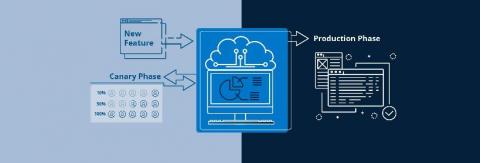
Canary deployments for IT operations

This article originally appeared in Jaxcenter. Canary deployments are a commonly-used DevOps practice for staggered rollouts, sending small updates to groups in order to catch and fix issues. Ultimately, experimenting with DevOps practices such as canary deployments can help IT (and IT operations) bridge the gap with the business and deliver more value, faster.

Transaction Monitoring | Upgrades and Use Cases in 2020

Synthetic monitoring takes care of all of the small interactions on our website that QA can’t catch. If you’re building an application for the web, a transaction check is an integral part of proactive downtime resolution. What we call transaction monitoring, or a transaction check, is a set of instructions that a probe server follows.

Key security functions of unified endpoint management

As part of digital transformation, the adoption of a wide range of devices for work is on the rise. A unified endpoint management (UEM) solution is capable of enforcing management policies and configurations, as well as securing endpoints. In a previous blog, we reviewed the capabilities of a good UEM solution. In this instalment, we look at UEM security features.