Operations | Monitoring | ITSM | DevOps | Cloud

Feature Spotlight: Auto-Tracing

Lumigo’s Auto-Tracing allows you to implement distributed tracing on your Lambda functions with 3-clicks and no manual code changes. If you’ve already decided to move to a serverless infrastructure, you probably understand the importance of monitoring your AWS Lambdas and what it might entail. For the few out there that are still wondering what monitoring AWS Lambda means, I’ll break it down for you in a couple of steps.

The Application Performance Monitoring Journey

One of the best parts of our job is enabling you to become the best #ITPerformanceHero that you can be. But behind the scenes, eG Innovations is filled with talented team members who wear their own IT Hero capes. We want to take some time to introduce you to some of the people who make eG Innovations the leading performance monitoring company on the market. We’re pleased to introduce Arun Aravamudhan, Head, APM and Web UX products.

Manage logs from multiple clouds and on-premises workloads together

We’ve heard from our customers that you need visibility into metrics and logs from Google Cloud, other clouds, and on-prem in one place. Google Cloud has partnered with Blue Medora to bring you a single solution to save time and money in managing your logs in a single place. Google Cloud’s operations management suite gives you the same scalable core platform that powers all internal and Google Cloud observability.

Customer Story: How Sentry Helps Grofers Meet Unprecedented Delivery Demand

As one of the leading grocery delivery services in India, Grofers needed to make massive fulfillment adjustments as demand rocketed due to an entire nation sheltering in place to help control the spread of infection during a global pandemic. For the Grofers team, providing much-needed grocery delivery service is as much of a technical challenge as a human resources one.

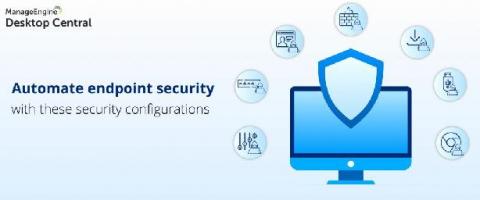
Security configurations-Part two: 8 imperative security configurations for your arsenal

In part one of this two-part blog series, we discussed seven reasons security configurations are an important part of an organization’s security posture. In this part, we’ll look at eight security configurations that can help with ensuring comprehensive control over the endpoints, avoiding vulnerabilities, deploying security configurations, and automating a number of verticals of endpoint security.

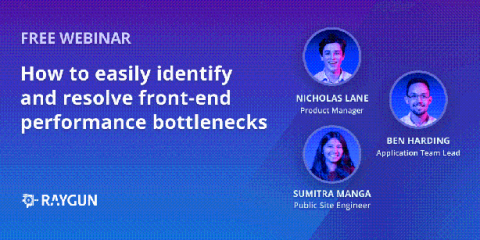
How to identify and resolve front-end performance bottlenecks

We all want lightning-fast websites and applications, but how do we prioritize our efforts in order to have the biggest impact on performance? We interviewed our own front-end team so we could share some best practices we use every day to improve and maintain the performance of Raygun.

Introducing the Datadog Operator for Kubernetes and OpenShift

As more environments run on Kubernetes—including our own— Datadog has been making it easier to get visibility into clusters of any scale. To minimize load on the Kubernetes API server, the Datadog Agent runs in two different modes. The node-based Agent queries local containers or external endpoints for data, while the Cluster Agent fetches cluster-level metadata from the API server.

Writing Tasks and Setting Up Alerts for InfluxDB Cloud

If you are using InfluxDB to monitor your data and systems, then alerts may be an essential part of your workflow. We currently have a system for monitoring your data whether it enters a critical or non-critical state. Here I’m going to give a detailed guide on setting up alerts using our InfluxDB Cloud product as well as some best practices for having a good experience using alerts.

8 Tips To Improve Working From Home

Most of us here at BugSplat spend the majority of our day at our computer. If you are reading this post, there's a good chance that you probably do too. And, like us, you probably expect that computers are just supposed to work for you. However, in my experience, this close relationship we share with our machines just expands the realm of possible annoyances we encounter day-in and day-out.

Build or buy your crash reporting tool?

You’re in the process of creating and launching new softwareand you want it to be as stable as possible. Or, maybe your software has been running for a while, but you’re frustrated with the bug-reporting workflow in place. Either way it’s time to look for a crash reporting process that fits your application. This leads to a natural question: Should we build it? Or should we buy it? To expand on this question, which will be better for my business?