Operations | Monitoring | ITSM | DevOps | Cloud

Sysdig's Prometheus monitoring behind the scenes

A few weeks ago, we announced that Sysdig is offering fully compatible Prometheus monitoring at scale for our customers, as well as a new website called PromCat.io hosting a curated repository of Prometheus exporters, dashboards and alerts. This got me thinking about how we were actually able to implement the changes necessary to offer this in our platform.
Grafana 7.0 preview: New image renderer plugin to replace PhantomJS

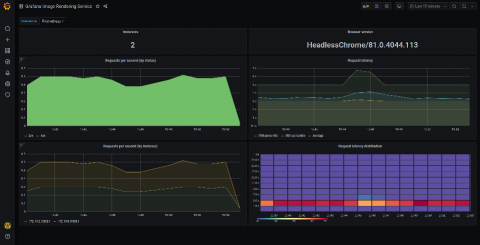
Many Grafana users export images of their dashboard panels. This feature powers the ability to receive alerts with a rendered image of the panel attached, which is valuable for quickly spotting if something is about to go sideways in production. Since Grafana v2.0, when support for server-side rendering of dashboard panels as images was introduced, PhantomJS has served as the built-in image renderer that enables this feature.

Redis monitoring 101: Metrics to watch

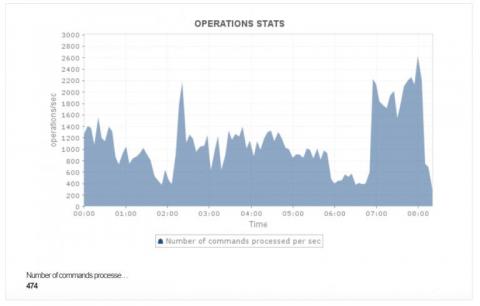
Redis, which stands for Remote Dictionary Server, is an open source, in-memory data structure store that’s used as a database, memory cache, and message broker. It stores data entirely in memory in the form of key-value pairs. This gives it an edge over all other databases, as it eliminates the need to access data from the disk. It also makes Redis one of the fastest NoSQL databases, where data is accessed in microseconds because there are no seek time delays.

Sponsored Post

The top web performance killers and how to prevent them

Loading speeds of websites will always be a tricky thing to manage. They depend on anything and everything between your user's choice of device and the server hardware your site runs on. There are many web performance killers that can be removed as you develop your web page. Removing as many of these barriers as possible is critical if you want your website to load smoothly and quickly for the majority of your users. Here are some suggestions for streamlining everything that is within your control to allow for the fastest possible load times for your users.

Elastic Observability in SRE and Incident Response

Software services are at the heart of modern business in the digital age. Just look at the apps on your smartphone. Shopping, banking, streaming, gaming, reading, messaging, ridesharing, scheduling, searching — you name it. Society runs on software services. The industry has exploded to meet demands, and people have many choices on where to spend their money and attention. Businesses must compete to attract and retain customers who can switch services with the swipe of a thumb.

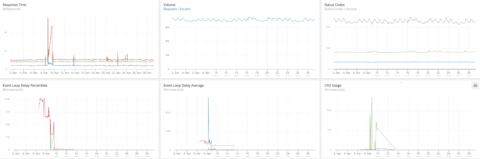
An Exploration of Runtime Metrics: Node's Event Loop

What Are Runtime Metrics? Runtime metrics can help us understand how an application is performing. SolarWinds® AppOptics™, a SaaS-based, full-stack infrastructure and application monitoring tool, now reports four categories of runtime metrics: CPU, memory, garbage collection times, and event loop times. Each metric category provides a view into how resources are used by an application.

Avoiding Memory Leaks in NodeJS: Best Practices for Performance

Memory leaks are something every developer has to eventually face. They are common in most languages, even if the language automatically manages memory for you. Memory leaks can result in problems such as application slowdowns, crashes, high latency, and so on. In this blog post, we will look at what memory leaks are and how you can avoid them in your NodeJS application. Though this is more focused on NodeJS, it should generally apply to JavaScript and TypeScript as well.

The role of infrastructure management in optimizing digital transformation

Digital transformation has now become a reality. It has moved a long way from being an option to a necessity, especially after the outbreak of COVID-19. While every department in an organization is being digitized, businesses reckon digital experience management as a key strategy in optimizing their transformation journey and also in creating a robust business model.

Monitor ProxySQL with Datadog

ProxySQL is a MySQL/MariaDB protocol–compliant load balancer and reverse proxy with native support for a range of popular backends including ClickHouse, Amazon Aurora, and Amazon RDS. ProxySQL efficiently distributes queries to your database servers and caches results, improving resource management and boosting database performance. You can also configure ProxySQL for high availability to reduce downtime.