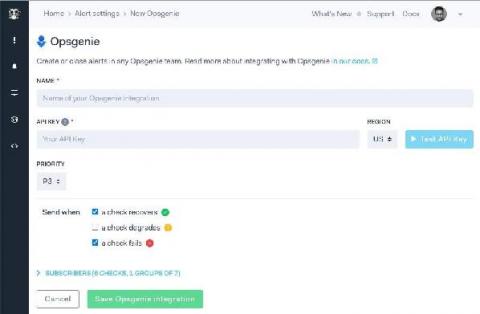
Changelog: Opsgenie, Dashboard improvements, Terraform and more
Here is an overview of the features & fixes we released over the last ~2 months.


Here is an overview of the features & fixes we released over the last ~2 months.
Security Information Monitoring or Security Event Monitoring is part of Security Information Management. Yes, I acknowledge they are flashy names and that even experts have their differences about concept and scope. Here in Pandora FMS, flexibility is part of our name, so, hereby, I will abbreviate it as Security Monitoring. As you can see, it is short and manageable!
IT professionals are now adapting to a remote environment and learning to manage a distributed, homebound workforce. From a technical standpoint, the process of setting up a remote workforce is well-known. For this blog post let’s dive into one step of the process, which is arguably the most important, user experience monitoring.
Most web apps can benefit from a background queue, often used to process error-prone or time-consuming side jobs. These background jobs can vary from sending emails, to updating caches, to performing core business logic. As any background queueing system scales the number of jobs it needs to process, the pool of workers processing those jobs needs to scale as well.
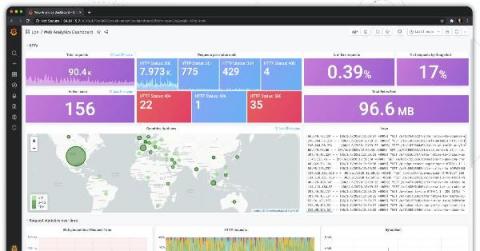
Over the past few years, NGINX users have naturally gravitated toward Grafana, and vice versa. These days, it’s not uncommon to see these two open source tools used together in the wild. And for good reason. F5, which acquired NGINX last year, is prioritizing building visibility across the entire product set, to make it easy for customers to quickly gain the insights that they need. Meanwhile, Grafana has evolved into the primary visualization and analysis tool in the open source market.
Reinventing any technology is an interminable process. When it comes to legacy infrastructure and virtualization, Nutanix took the giant leap to hyper-converged infrastructure (HCI). Dating back to 2009, Nutanix brought in HCI with the vision to invent a better way to build and manage data centers.
As modern development practices evolve at rapid rates we must stay focused on what makes for a great experience; fast, flawless software. In the pursuit of building fast, performant software, you’ve likely come across performance monitoring products like Real User Monitoring (RUM) and Application Performance Monitoring (APM). In this article, we go deeper into how using RUM and APM can help you and your team build better software experiences.