Operations | Monitoring | ITSM | DevOps | Cloud

6 Must-Have Online Reputation Management Tools

The internet is a wonderful tool that has literally transformed the lives of nearly everyone on the planet. This complicated series of fiber optic cables and wireless transmissions, switches and software create a worldwide network that allows for the movement of voice, video and text anywhere in the world at nearly the speed of light.


Has your company reached digital maturity?

Do you know what digital maturity is? Do you understand how achieving it can affect your company? Do you know how to detect if you already reached it? Knowing what digital maturity is and the ability to assess it can be essential for a company. In this article we will find out what digital maturity is and see some clues that can indicate the degree of digital maturity a company has. Shall we get started?

Adding preventive revocation alerts to our certificate monitoring

As part of our SSL certificate monitoring, we check a lot of things. The usuals, like if it covers the right domain name or if it hasn't expired are, of course, already included. But SSL certificates can get quite complex. Sometimes, SSL certificates get revoked by the issuer. When that happens, browsers worldwide stop trusting them and will throw an invalid certificate warning.

G2 Crowd Users Rank Uptime.com Best in Support and Most Likely to Recommend

Uptime.com has been ranked #1 in Customer Support, and has been voted Most Likely to Recommend by the G2 Crowd Community. These terrific achievements cap off a year of activity and updates that have helped Uptime.com remain a market leader in IT alerting and web monitoring solutions. With top scores in IT Alerting and Web Monitoring, Uptime.com continues to grow alongside our userbase to create the most powerful and accessible web monitoring platform.

Distributed Tracing Tools and New Industry Standards

Metrics and logs have been around for a long time, yet we haven’t adopted common standards for them. Sure, there have been attempts on the metric side with OpenMetrics. Similarly, tracing only got a standardization effort with OpenTracing just a few years ago. There was no effort in a unified approach to standardize all observability signals until OpenTelemetry began a little less than two years ago. And there has been a need.

Application Slowness Troubleshooting:Prove it is not the Network!

This article was originally published on NetworkDataPedia. The one complaint that an IT administrator dreads to receive is one where an end user says, “My application is slow!”. The application in question can be a web application, an enterprise application like SAP, Microsoft SharePoint, or a SaaS application like Salesforce or Office 365.

Surviving IT in Snap Downturns

The global effect of and challenges to business in 2020 is the very definition of “unprecedented.” While large enterprises enjoy the advantage of scale to redistribute focus and sustain demand for their goods and services, small- to medium-sized businesses may not be as lucky. For example, your favorite restaurants and retail shops, both local and national chains, have been hit in previously inconceivable ways, and are doing everything in their power to survive.

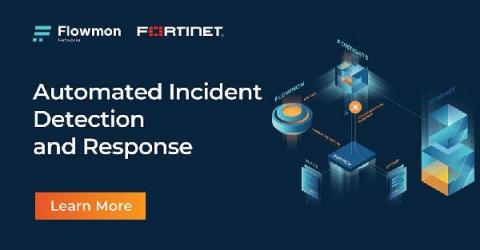
Key Fortinet and Flowmon Integrations: Automated Incident Detection and Response

Flowmon has recently joined Fortinet’s Open Fabric Ecosystem by integrating with FortiGate and FortiSIEM. This cooperation brings automated system for threat detection and response, blocking security risks in their infancy, and giving time to administrators to carry out forensics.

Monitor Hazelcast with Datadog

Hazelcast is a distributed, in-memory computing platform for processing large data sets with extremely low latency. Its in-memory data grid (IMDG) sits entirely in random access memory, which provides significantly faster access to data than disk-based databases. And with high availability and scalability, Hazelcast IMDG is ideal for use cases like fraud detection, payment processing, and IoT applications.

Community Highlight: How Supralog Built an Online Incremental Machine Learning Pipeline with InfluxDB OSS for Capacity Planning

This article was written by Gregory Scafarto, Data Scientist intern at Supralog, in collaboration with InfluxData’s DevRel Anais Dotis-Georgiou. At InfluxData, we pride ourselves on our awesome InfluxDB Community. We’re grateful for all of your contributions and feedback. Whether it’s Telegraf plugins, community templates, awesome InfluxDB projects, or Third Party Flux Packages, your contributions continue to both impress and humble us.