Operations | Monitoring | ITSM | DevOps | Cloud

Can Distributed Tracing Replace Logging?

Logging has been around since programming began. We use logs to debug issues and understand how software works at the code level. After logging and debuggers, profilers are a dev’s best friend when writing code and may run in production with limits to reduce overhead. As we distributed architectures — making systems more complex — centralized log aggregation was soon necessary. At that point, we had to analyze this data. Hence, log analytics technologies were born.
Mustache pickers How they help you design better dashboards

According to Merriam-Webster, a mustache is 'the hair growing on the human lip' – so let's be clear that when referring to mustache pickers in this blog, we are not suggesting using tweezer-like tools to help you design hipster dashboards. Instead, we are talking about an awesome SquaredUp productivity feature called mustache picker that helps you get quick and effective results when using mustache template syntax within SquaredUp.

Sponsored Post

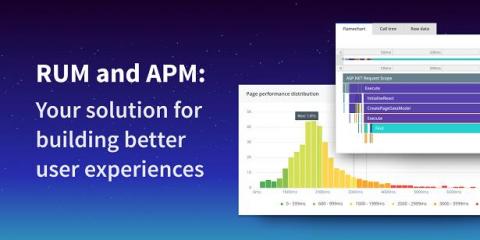
RUM and APM: Your solution for building better user experiences

As modern development practices evolve at rapid rates we must stay focused on what makes for a great experience; fast, flawless software. In the pursuit of building fast, performant software, you've likely come across performance monitoring products like Real User Monitoring (RUM) and Application Performance Monitoring (APM). In this article, we go deeper into how using RUM and APM can help you and your team build better software experiences.

Solving Runaway Series Cardinality When Using InfluxDB

In this post, you’ll learn what causes high series cardinality in a time series database and how to locate and eliminate the culprits. First, for those of you just encountering this concept, let’s define it: The number of unique database, measurement, tag set, and field key combinations in an InfluxDB instance. Because high series cardinality is a primary driver of high memory usage for many database workloads, it is important to understand what causes it and how to resolve it.

Real User Monitoring for JavaScript with Retrace

Real User Monitoring, also known as End User Monitoring or RUM, is a way of monitoring the client side portions of an application. Real User Monitoring for JavaScript allows developers to have access to key metrics for load times and user paths being used in production as part of their application performance management (APM).

PostgreSQL vs MySQL

Despite all of the hype about NoSQL databases, MySQL and PostgreSQL are two database management systems that have truly stood the test of time. These systems were developed back in the mid 90’s, and they still consistently rank among the top 5 most popular databases across the internet. So why are they so widely used and how do they compare? Read on to find out!

AWS ECU vs vCPU-Everything You Need to Know

If you’ve deployed an application or service to the Amazon Web Service (AWS) cloud, you’ve probably made use of an EC2 instance. One of the decisions that you had to make before you could start a new instance, was which instance type to use. Choosing an EC2 instance type can be a complicated process. AWS organizes their instance types into instance families, and within an instance family, there are varying sizes from micro to 32xlarge.

Masaf Dawood on Google Cloud's Compelling Enterprise Story

Google Cloud has been gaining some noticeable traction in recent months: 43% growth in Q2 is nothing to sniff about, especially during a global recession. Masaf Dawood is director of Google Cloud services with SpringML, a premier Google Cloud partner with specialties in application development, data analytics, machine learning and marketing analytics. SpringML works exclusively with Google Cloud and has worked on 200 engagements with Google since the consultancy was founded in 2015.

Pandora FMS vs Centreon vs Nagios XI

Centreon is a solution for monitoring applications, systems and networks, based on Nagios source code. On 1st August, 2005 the company Merethis (now Centreon) was founded and began working on “their” Nagios version, calling it Oreon. In July 2007, the Oreon software changed its name to Centreon due to a name conflict with Orion (a component of the SolarWinds monitoring suite).