Operations | Monitoring | ITSM | DevOps | Cloud

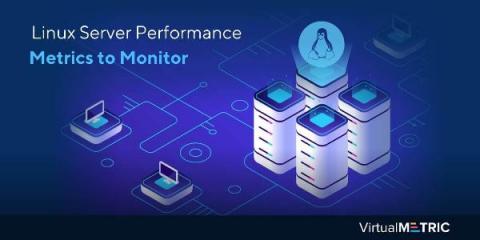
Linux Server Performance Metrics to Monitor

Linux is one of the most popular and widely used open-source operating systems in the world today. It provides the key advantage of stability, compatibility, security and customization. Since Linux servers are the backbone of an organization’s IT infrastructure, a sudden change in the CPU usage or memory can adversely affect the performance of applications.
Launching AppSignal Monitoring for Node.js 1.0

Do you know how many errors your Node.js application had last week? How many users were affected? Which servers were high on CPU/Memory/Disk? If you do know, how many different tools did you have to install, and how many hours you’ve spent configuring all those tools? AppSignal is here to change the way you monitor your apps and simplify your life as a developer. Today, we officially launch the 1.0 version of @appsignal/node.js.

Announcing Easy Tune 2.0 - Everyday Tuning Made Easy

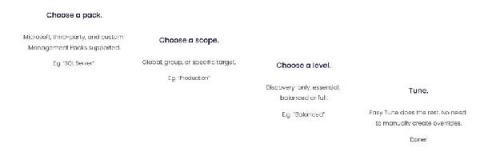
We know that tuning your SCOM alerts can be a time consuming and arduous task! That’s why the release of Easy Tune 2.0 bring with it not only, new improved features and functionality, but also a more user friendly, customer-focused portfolio of tuning packages. Our new suite of tuning products is designed to suit any business from low-budget SMEs to large scale enterprises, with endless tuning requirements.

Back to work: IT monitoring best practices

Work remains work, regardless of the location. Working remotely has become the new normal, but some organizations have started to return to their office workspaces, albeit with a minimal workforce. Though going back to work may not be as difficult as adapting to remote work instantly, certain operational challenges are unavoidable; for example, monitoring workspace infrastructure is nothing new, but managing different locations simultaneously has yet to become customary.

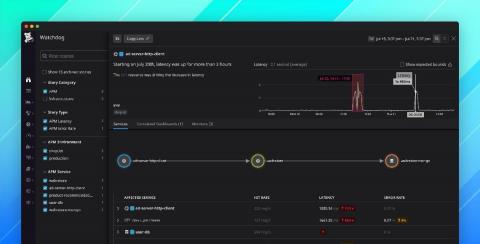
Watchdog surfaces root cause insights and Kubernetes anomalies

Since 2018, Watchdog has provided automatic anomaly detection to notify you of performance issues in your applications. Earlier this year, we introduced Watchdog for Infra, enhancing Watchdog to also monitor your infrastructure. We’re pleased to announce the latest enhancements to Watchdog, which now provides more visibility and greater context around the full scope of each application issue.

Six-peat! Once Again, IDC Ranks Splunk #1 in ITOA Market Share

We just got some great news. IDC has ranked Splunk #1 for both market share and market revenue in their IDC Worldwide IT Operations Analytics Software Market Shares, 2019 report. This is the sixth year in a row IDC has ranked Splunk as #1 in ITOA. While we’re proud of this recognition, let me say right away that our success is due to the continued success of our customers, and we’re very grateful for the opportunity to be a part of it.

Introducing the InfluxDB Template UI: Monitoring Made Simple

At InfluxData, we’re obsessed with time to awesome — how quickly can you start working productively with time series data? What can we do to make things better? InfluxDB Templates are a great example of this mindset. Back in April, we announced Templates as a way to package up everything you need to monitor a particular technology — Telegraf configurations and InfluxDB Dashboards, Tasks, Alerts, and related artifacts — into a single configuration file.

Know your access control: RBAC vs. ABAC

Working together successfully as a team — especially in this increasingly remote world — is all about collaboration. As part of that collaboration, it’s critical that team members have access to the files and programs they need to accomplish their jobs, and that access should be easily revocable for when employees change roles or leave the company. This is achieved through access control, which, simply put, defines who is allowed to access what.

Planning for a Post-Pandemic World as an IT Leader

As COVID-19 cases began to rise around the world in March 2020, governments and businesses had no choice but to take extraordinary measures to flatten the curve. As an IT leader, you were likely tasked with helping entire companies transition to remote work all at once. Cubicles were replaced by home offices. Face-to-face meetings were replaced by video calls. Work performance was measured by tasks completed instead of hours worked. Digital connectivity became more important than ever before.