Operations | Monitoring | ITSM | DevOps | Cloud

Microsoft Login Failures Affecting Office 365 and Azure

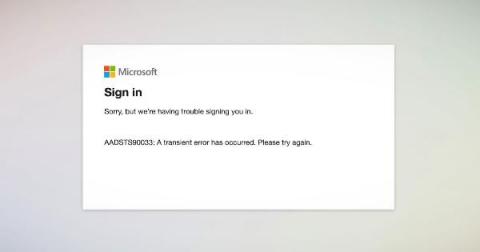
On Monday, September 28th 2020, Microsoft had a failure with their authentication system that affected major products and services such as Office 365, Outlook, Teams, Sharepoint, Azure and many others. The Microsoft login failure affected consumer and business users that were not already authenticated with the Azure Active Directory (Azure AD) service. Microsoft confirmed the outage on their Azure Status Dashboard website.
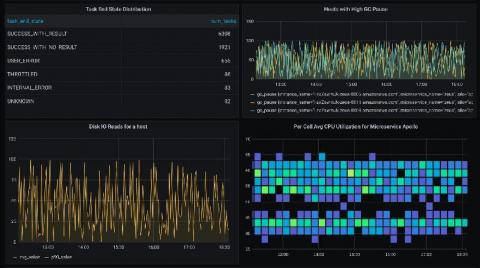

Now you can add Amazon Timestream to your Grafana observability dashboard

Today, AWS launched Amazon Timestream, a fast, scalable, serverless time series database purpose-built for IoT use cases. If you’re looking into trying out Timestream, know that you can visualize the native Timestream queries with Grafana out of the box. Here are some examples of the robust, SQL-style Timestream queries visualized in Grafana.

Troubleshooting your apps with Cloud Logging just got a lot easier

In Cloud Logging, we understand that logging is a critical part of what it takes for you to operate reliable applications and infrastructure on Google Cloud. We’ve added new features to help you more easily store, find and control your logs. Today, we’re announcing a new default logging experience: Logs Explorer. Previously known as Logs Viewer Preview, Logs Explorer provides new tools for you to better understand and analyze your logs during the troubleshooting process.

ELK Stack: 5 Common ELK Issues and How to Fix Them

Running an ELK stack provides unrivaled benefits for your organization, however, ELK issues will inevitably crop up. ELK is scalable, and largely agnostic of internal infrastructure, making it a great asset for SMEs and enterprises. However, successfully deploying and running an ELK stack is not without its difficulties. In order to keep your ELK stack running at optimum performance, you need to familiarize yourself with some of the most common ELK issues.

Using the Prune Filter in Logstash

Logstash has a number of helpful plugins. We’ve covered the mutate plugin in great detail here, as well as Logstash grok, but it was time to go over some of the others. Here, the Logstash Prune Filter will get its due attention. Its existence owes to the need to remove fields according to select blacklists or whitelists of field names and their associated values. Put more curtly, it prunes the excess branches (fields) in your garden (your data).

Announcing Streama: Get complete monitoring coverage without paying for the noise

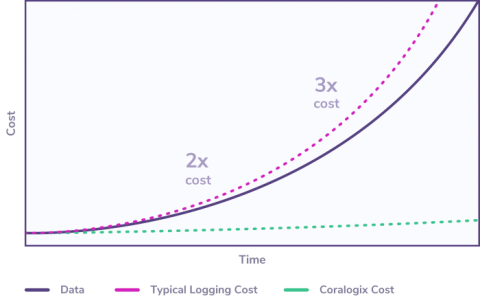
With the new Streama capability announced today, you no longer have to choose what to monitor and what to drop to manage your logging costs. For years, our customers have enjoyed the benefits of a log analytics platform that enables them to autonomously manage and analyze data in their cloud applications. Our machine learning engine empowers users to improve their system stability and accelerate their release cycles.

New Teams Connector for Operations Manager - BETA program available today

OpsLogix releases a BETA program of a Teams Connector for Operations Manager (SCOM), as the latest addition in our Virtual Operator product lineup. As of today, you will be able to sign up and join our program. The new connector is a welcomed addition to our existing products, such as the Service Now Connector and EZalert,” says Jonas Lenntun, Business Development at OpsLogix. “Not only is the timing just right since we all depend on virtual collaboration and meetings to work.

Exploring Node.js Async Hooks

Have you ever heard of Node.js async hooks module? If the answer is no, then you should get familiar with it. Even though it’s new stuff (released along with Node.js 9) and the module is still in experimental mode, which means it’s not recommended for production, you should still get to know it a bit better. In short, Node.js async hooks, more specifically the async_hooks module, provides a clear and easy-to-use API to track async resources in Node.js.

Now in Beta: SLA Monitor by StatusGator

StatusGator has been monitoring hundreds of status pages for more than 5 years. During this time, we’ve collected millions of data points about the status of the cloud: What went down, how long it was down, messages about why, and more. As StatusGator grows, we’re working on ways to incorporate this archival data into StatusGator for various uses. One common use: holding vendors accountable to Service Level Agreements. Introducing: SLA Monitor by StatusGator.

New Microsoft partnership embeds Datadog natively in the Azure portal

We are excited to announce a new partnership with Microsoft Azure, which has enabled us to build streamlined experiences for purchasing, configuring, and managing Datadog directly inside the Azure portal. This first-of-its-kind integration of a third-party service into a public cloud provider reduces the learning curve for using Datadog to monitor the health and performance of your applications in Azure—and sets you up for a successful cloud migration or modernization.