Operations | Monitoring | ITSM | DevOps | Cloud

Smarter ITSI Episodes Powered by Community Detection Algorithms

In this blog we are going to describe how you can create a notable event policy in IT Service Intelligence (ITSI) that is able to group your events using labels generated by unsupervised machine learning in the Smart ITSI Insights App for Splunk – and don’t worry you don’t have to be a data scientist to read this blog!
A Dashboard Guide for IT Operations Metrics

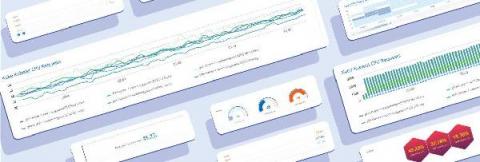
As one of the three pillars of observability, along with logs and traces, digesting metrics is a crucial part of any ITOps admins’ job. Metrics are a numeric representation of data measured over intervals of time and thus can derive knowledge of system behavior historically, which can help predict future patterns of behavior and inform investigations of issues and incidents.

Removing the Chaos Between Monitoring and Incident Management

The monitoring and incident management process is often chaotic and time-consuming for organizations. However, there is a better way to approach IT incidents and make your existing process function better. Topology and relationship-based observability solutions take the incident management process from chaotic to structured. Let’s look into how StackState’s solution improves and speeds up the incident resolution process.

Introduction to StatsD

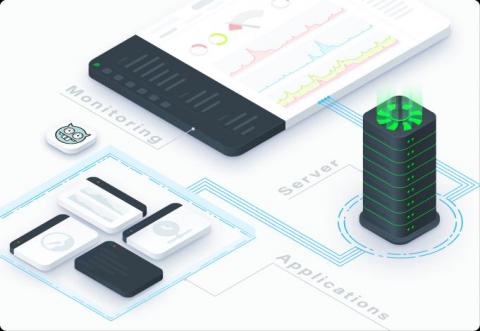
StatsD is an industry-standard technology stack for monitoring applications and instrumenting any piece of software to deliver custom metrics. The StatsD architecture is based on delivering the metrics via UDP packets from any application to a central statsD server. Although the original StatsD server was written in Node.js, there are many implementations today, with Netdata being one of them.

SquaredUp helps customers save 20% of Azure costs

Are you suffering from overspending in Azure, lack of cost visibility and lack of context? You’re not alone; Azure cost management is a problem we hear about time and time again. That is why we created top-notch cost tiles that would allow users to build the perfect Azure cost dashboard, and help them quickly identify overspends and expensive resources in their Azure tenant.

Auto-instrumenting a Java Spring Boot application for traces and logs using OpenTelemetry and Grafana Tempo

Auto-instrumentation is a subject I have not had much experience with. Here at Grafana Labs, we primarily develop in Go, which doesn’t afford such luxuries. However, there is an enormous amount of interest from the community in Java auto-instrumentation, so I set out to determine what was possible using the shiny new OpenTelemetry auto-instrumentation libraries.

Martello in Motion - University of New Hampshire

Founded in 1866, the University of New Hampshire (UNH) is a public research university with its main campus spread across 2,600 acres in Durham, New Hampshire. For more than 154 years, UNH has delivered hands-on learning, research, and work experiences that bring together students, faculty, and private and public partners to create life-changing opportunities and innovative solutions across the world.

How to use Sentry Attachments with Mobile Applications

In a previous life as an Android developer, a customer reported a nasty bug that we didn’t know how to fix. After what felt like countless hours of debugging and writing back and forth to customer support, our only option left was to get our hands on the users’ local database. However, for a variety of reasons, we couldn’t ask the customer to root the device, copy the database, and send it to us.

Improving Node.js Application Performance With Clustering

When building a production application, you are usually on the lookout for ways to optimize its performance while keeping any possible trade-offs in mind. In this post, we’ll take a look at an approach that can give you a quick win when it comes to improving the way your Node.js apps handle the workload. An instance of Node.js runs in a single thread which means that on a multi-core system (which most computers are these days), not all cores will be utilized by the app.

Introducing monthly site reports

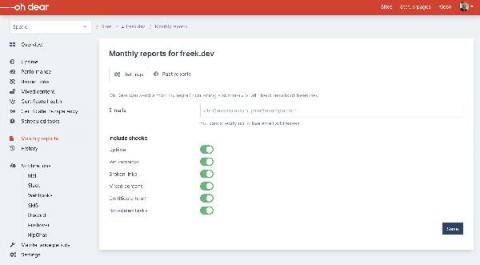
Today, we're introducing a new major feature: monthly site reports. In such a report, you got a bird's eye summary of everything we know of a site in a particular month. We've gone the extra mile and added the ability to mail these reports to people outside of your team automatically. If you're an agency and manage sites for your clients, you could use this feature to send a monthly report of all broken links to your client. In this blog post, we'll tell you all about the feature.