Monitoring Microsoft 365 User Experience using Microsoft Graph
Understanding the Graph API’s architecture and value in standard monitoring scenarios.


Understanding the Graph API’s architecture and value in standard monitoring scenarios.
You surf the internet, don't you? While all of us are at home due to Covid lock-down and accepting a new reality, the majority of the work is happening online. IT managers are looking for tools that can track the user digital experience. Executives are reading a report from Gartner or Forrester about some of the best networking monitoring solutions available on the market. Project managers are using Microsoft Teams online to communicate and ensure team members are meeting deliverables on time. Remote employees everywhere use OWA to check their office mails. No matter what, you can be quite sure that everyone is using their favorite browser and search engine for connecting online and accomplish tasks.
In every home, there is a place that we store things that we no longer need or use. It’s something that once gave us joy, albeit at an initial cost, and for this reason we seem unable to throw it away even though we no longer have a use for it. The main culprit? Old tech gadgets. Whether it’s at my home, my parent’s house, or the family holiday house, there is always a drawer where old phones, cables, music players, and earphones are stored away and forgotten about.
To say that things have changed since March 2020 is so commonplace it’s becoming trite. Everybody knows that people have worked from home where possible. HR and IT functions have dovetailed as never before. The HR personnel are therefore likely to be working from home, but they have an additional pressure: they are supporting, and their managers are managing, teams they can’t see.
Kubernetes provides abstraction and simplicity with a declarative model to program complex deployments. However, this abstraction and simplicity create complexity when debugging microservices in this abstract layer. The following four vectors make it challenging to troubleshoot microservices.
High-level information and speedy configuration for the busy network administrator. If you want to respond to network issues quickly and promptly, you can’t waste time digging for information. So how can Flowmon 11.1 help?
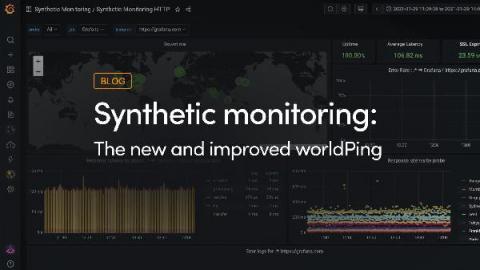
Many of us get sentimental about past projects we’ve worked on…for me it is a mobile dashboard that leveraged ML/AI to help a sales team make quicker decisions while in the field (nerdy, I know…but it was one of my first projects as a UX Designer when I was starting out my career, and I have many fond memories about this project). For many members of the team at Grafana Labs, that sentimental project is worldPing.
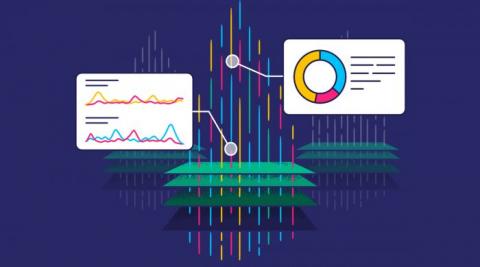
System traceability is one of the three pillars of observability stack. The basic concept of observability is of operations, which include logging, tracing, and displaying metrics. Tracing is intuitively useful. Identify specific points in an application, proxy, framework, library, runtime, middleware, and anything else in the path of a request that represents the following of either ‘forks’ in execution flow and/or a hop or a fan out across network or process boundaries.
The year 2020 was a tough one and tested the grit and resilience of the human race. Organizations across the globe had to prioritize the safety of employees, customers, and associates. The rapid response to COVID-19 has enabled millions to work remotely because of advanced cloud computing technologies supplied through public cloud services like Amazon Web Services (AWS) and Microsoft Azure.