Operations | Monitoring | ITSM | DevOps | Cloud

New in the Kubernetes integration for Grafana Cloud: Kubernetes events, Pod logs, and more

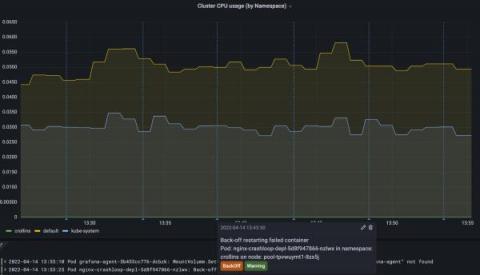
The Kubernetes integration for Grafana Cloud helps users easily monitor and alert on core Kubernetes metrics using the Grafana Agent, our lightweight observability data collector optimized for sending metric, log, and trace data to Grafana Cloud. It packages together a set of easy-to-deploy manifests for the Agent, along with prebuilt dashboards and alerts.

How to Monitor Website Performance

Most organizations today have a large digital presence, and some rely significantly on their web applications to provide value to their customers and generate income. Keeping your website up and running 24/7 isn't enough in today's digital world. To provide a better experience, you should optimize your web pages frequently. Slow-loading pages or those that aren't mobile-friendly might cause an increase in bounce rate as well as influence your search engine rankings.

Debugging the Java Message Service (JMS) API using Lightrun

The Java Message Service API (JMS) was developed by Sun Microsystems in the days of Java EE. The JMS API provides us with simple messaging abstractions including Message Producer, Message Consumer, etc. Messaging APIs let us place a message on a “queue” and consume messages placed into said queue. This is immensely useful for high throughput systems – instead of wasting user time by performing a slow operation in real-time, an enterprise application can send a message.

Use formulas and functions in RUM monitors for high-value alerts

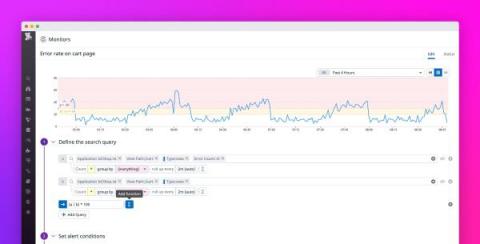
Real User Monitoring (RUM) gives you visibility into the behavior of your users and the performance of your applications. You may already be using RUM monitors to automatically notify your team when the number of RUM events—such as pageviews, clicks, or errors—rises above a threshold you define.

How Network Monitoring Defuses Hacker Bombs

You know by now that hackers literally never sleep. Chances are your network has been hit before and absolutely will be hit again. Hackers invent new techniques every day and tweak existing ones, many of which are automated—which is why we can say that hackers literally never sleep. Hackers either attack your network directly or attack your infrastructure through your network. Either way, the network itself is your first line of defense.

How to Foster Digital Dexterity in Your Workplace

Digital dexterity is a fundamental attribute within the most successful workforces – and will only become more essential as businesses enter the rapidly approaching future workplace. Yet, many businesses struggle to assess and promote this vital skill among their own employees. The increasing value of digital dexterity is due in large part to the digitization of the workplace, which was well underway prior to the pandemic..

eCommerce giant Blinkit's journey from ELK Stack to Grafana Cloud

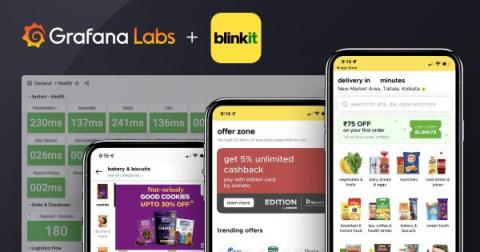
The promise: Order any groceries and essentials from Blinkit’s mobile app, and they’ll be delivered to your doorstep within 10 minutes. The process: Very difficult with a legacy logging tool. For Blinkit, the instant delivery service formerly known as Grofers that serves millions of consumers across India, their tech stack was beginning to interfere with business operations at a time when the company was hyperscaling due to its popularity.

Distributed Tracing Best Practices for Microservices

The management of modern software environments hinges on the three so-called “pillars of observability”: logs, metrics and traces. Each of these data sources provides crucial visibility into applications and the infrastructure hosting them. For many IT operations and site reliability engineering (SRE) teams, two of these pillars — logs and metrics — are familiar enough.