Operations | Monitoring | ITSM | DevOps | Cloud

Guide To APM For Marketers

Image source: Unsplash.com With an increasing number of applications and populated data, monitoring becomes crucial since businesses are challenged to satisfy millions of users simultaneously. In order to detect performance problems in a timely manner, companies require APM tools to collect and process app and user data that is being generated continuously.


Shifting From ITOps to AIOps: Capgemini's Transformational Journey

In a hyper-digital world, business transformation is vital for all organizations to compete and deliver against business and customer demands. If you aren’t innovating and moving forward, you are falling behind as the competition and new market entrants are surely adopting technologies that give them the agility to meet needs and expectations. That means the challenge isn’t just about keeping pace, but about leading the way.

How to observe your Asterisk instance with Grafana Cloud

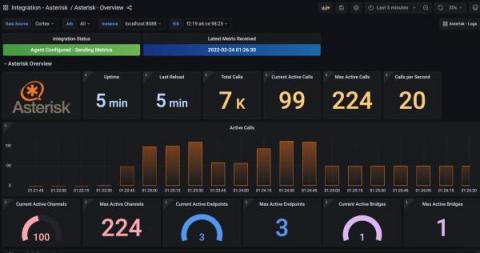
Observability and monitoring is a fundamental part of the contact center environment. When there are thousands of live voice and other multi-channel interactions happening, it is crucial to keep a close eye on the system because any issue in service gives an instant blow to the customer experience. Asterisk is a free and open source framework for building communications applications and is sponsored by Sangoma.

How to capture Spring Boot metrics with the OpenTelemetry Java Instrumentation Agent

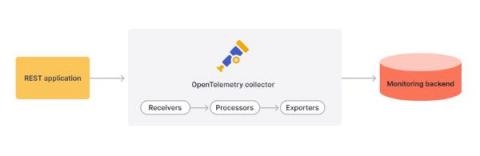
In a previous blog post, Adam Quan presented a great introduction to setting up observability for a Spring Boot application. For metrics, Adam used the Prometheus Java Client library and showed how to link metrics and traces using exemplars. However, the Prometheus Java Client library is not the only way to get metrics out of a Spring Boot app. One alternative is to use the OpenTelemetry Java instrumentation agent for exposing Spring’s metrics directly in OpenTelemetry format.

Survey Review: Key Challenges of Scaling Observability with Cloud Workloads

When you migrated critical infrastructure to the cloud, what were your goals and expectations? Odds are, you hoped leaving on-premises infrastructure would produce significant organizational benefits. You probably figured you’d streamline operations and reduce management overhead. You felt you’d have an easier time meeting business goals. Perhaps most important of all, you likely expected your environment would become less complex, and even cost less to operate.

Using SAP in manufacturing for increased productivity

As the landscape continues to become more challenging, it's safe to say automation is the future of manufacturing. Changing customer demands, supply chain constraints and pressure for faster turnaround are some of the realities that companies face. This has predicated an industry agnostic need for a hands off approach to manufacturing. SAP for manufacturing offers a transformative end to end manufacturing process for more resilient, future ready enterprises.

Monitoring Applications Declaratively with Terraform

Running infrastructure at scale almost always guarantees dizzying complexity and anxiety-inducing pressure to maintain systems in a production environment. This is further exacerbated when multiple delivery teams require slight variations of the same infrastructure components, across several cloud providers, each with a different set of observability requirements. Gradually, production environments become large, unmanageable, difficult to change, and perhaps resembling the figure below.

What is Kibana? (Updated Guide For 2022)

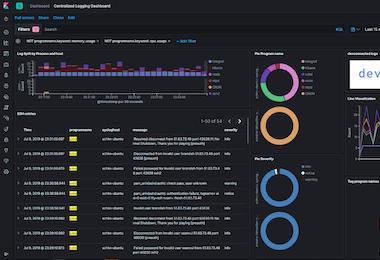
Kibana is a popular user interface used for data visualisation and for creating detailed reporting dashboards. This piece of software notably makes up a key part of the Elastic Stack alongside Elasticsearch and the extract, transform and load (ETL) tool, Logstash. In this comprehensive introduction to Kibana, we are covering all of the basics that you will need to know as a user considering using Kibana for your log data visualisation and reporting needs.

Monitor Flutter application performance with Datadog Mobile RUM

Flutter is a popular open source framework that allows you to build, test, and deploy high-performance, multi-platform applications with a single codebase. Developed by Google, Flutter is backed by a robust developer community and is compatible with the latest native functionalities, including iOS Metal.