Operations | Monitoring | ITSM | DevOps | Cloud

The latest News and Information on Monitoring for Websites, Applications, APIs, Infrastructure, and other technologies.

Payment gateway analytics for payment service providers

Payment gateway analytics tracks the payment processing journey and related event data across all payment gateways. When used efficiently, payment gateway analytics can benefit businesses by providing insights into their revenues, payment trends, and customer behavior. Payment gateway analytics provides much needed visibility into the payments environment to enable the fast detection of transaction performance issues, anomalies or trends.

How to Retain Customers on your SaaS Platform: Four Key Techniques

New customer logos may be the lifeblood of top-line revenue growth and the focus of sales and marketing teams. But renewals have emerged in the last few years as a key growth driver for SaaS companies. A recent McKinsey study indicated that existing customers can drive between a third and a half of new revenue growth, even at startups. And we’ve all seen the data that says new customer acquisition costs 5X as much as customer retention.

Why a Slow Website Hurts Your Conversion Efforts

Six years ago, Microsoft found that our global attention span had shrunk from twelve to eight seconds in just five years. This was back in 2015 when Instagram had 400 million users (it currently has over 1 billion), and TikTok, the 15-second-video king, wasn't even born. Yes, our patience is becoming shorter and shorter, and the internet is flooded with websites and content. But all is not lost. If you make sure your website loads faster than average, you may have a chance to bag a potential customer.

Compare and optimize your code with Datadog Profile Comparison

Code profilers offer detailed insight into the efficiency of application code by measuring things like the execution time and resource utilization of a service. Datadog’s always-on, low overhead Continuous Profiler provides snapshots of code performance for a service that are tagged with key metadata (e.g., region, service, release), so you can easily identify and optimize inefficient code.

AWS X-Ray vs Jaeger - key features, differences and alternatives

Both AWS X-Ray and Jaeger are distributed tracing tools used for performance monitoring in a microservices architecture. Jaeger was originally built by teams at Uber and then open-sourced in 2015. On the other hand, AWS X-Ray is a distributed tracing tool provided by AWS specifically focused on distributed tracing for applications using Amazon Cloud Services. Jaeger is a popular open-source tool that graduated as a project from Cloud Native Computing Foundation.

What's new in Grafana Cloud for September 2021: New panels, query caching, synthetic monitoring updates, and more

Here at Grafana, we’re constantly shipping new features to help our users get the most out of Grafana Cloud. Over the last few months, we’ve made it even easier to get started with out-of-the-box dashboards and new visualizations in Grafana Cloud. We also introduced capabilities like query caching, a “prettify JSON” option and commands for cortex-tools to make your data, dashboards, and queries more efficient.

Overprovisioned and Overspent: Optimize Before You Lift and Shift

Do you know what’s wrong with “lift and shift?” Everything. But why? In this video, SolarWinds Head Geek Leon Adato and Technical Content Manager for Community Kevin M. Sparenberg dig into what goes wrong during on-prem to cloud migration of applications and systems in many organizations and how monitoring can help not only avoid those problems but improve the overall outcome as well.

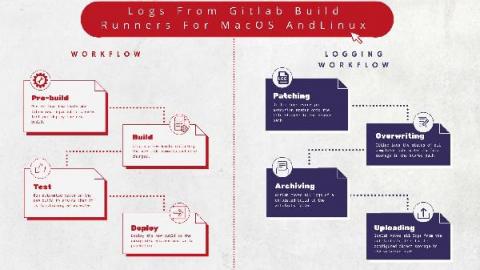
Logging Gitlab Runners for MacOS and Linux

Gitlab is the DevOps lifecycle tool of choice for most application developers. It was developed to offer continuous integration and deployment pipeline features on an open-source licensing model. GitLab Runner is an open-source application that is integrated within the GitLab CI/ CD pipeline to automate running jobs in the pipeline. It is written in GoLang, making it platform agnostic. It is installed onto any supported operating system, a locally hosted application environment, or within a container.