Operations | Monitoring | ITSM | DevOps | Cloud

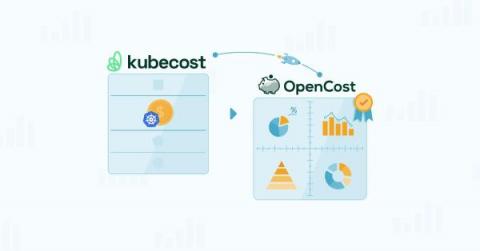
Kubecost Vs. OpenCost: What's The Difference? (Updated 2026)

Kubernetes (K8s) adoption has exploded over the past few years. But it hasn’t been easy to monitor, manage, and optimize K8s costs. To provide greater cost visibility into Kubernetes clusters and environments, Kubecost launched in 2019 and was acquired by IBM in 2024, while OpenCost debuted in 2022. OpenCost has several founding contributors. But Kubecost developed the cost allocation engine that the OpenCost implementation uses.

Beyond the spreadsheet: Using GitOps to generate DORA-compliant audit trails.

In the 2026 regulatory landscape, manual audits are a liability. This guide explores using GitOps to generate DORA-compliant audit trails through IaC, drift detection, and automated segregation of duties. Discover how the Qovery management layer turns compliance into an architectural output, reducing manual overhead for CTOs and Senior Engineers.

#054 - From Shiny Objects to FinOps: Taming Cloud Costs in the AI Era with Josh Schlanger (CloudX...

In this episode of the Kubernetes for Humans podcast, we are joined by infrastructure and FinOps expert Josh Schlanger. Drawing on over 15 years of experience across Martech, e-commerce, and health tech, Josh shares why solving core business problems should always take priority over chasing new, "shiny object" technologies.

What Are Containers? (And Why "It Works on My Machine" Finally Dies)

What are containers in DevOps—and why do they solve the classic “it works on my machine” problem? In this episode of Cloud Security in a Minute, Sysdig breaks down containers in simple terms: what they are, how they work, and why they’ve become the backbone of modern cloud applications. You’ll learn: Containers package everything an application needs—code, dependencies, and system tools—so it runs consistently anywhere: your laptop, the cloud, or at massive scale.

Groq vs. GPUs: The future of AI inference in 2026

Back in 2016, Jonathan Ross founded Groq, the AI chip startup, which went on to enter a non-exclusive licensing agreement with NVIDIA for Groq’s inference technology (as part of a $20 billion deal). The name ‘Groq’ is commonly confused with X (formerly Twitter)’s Grok, which was launched in 2023 as a Gen AI chatbot. As demand for real-time AI continues to grow, inference has become one of the most important and expensive parts of the machine learning lifecycle.

NVIDIA DGX vs. NVIDIA HGX: What is the difference?

While GPUs remain among NVIDIA's flagship products, they also offer a range of other compute products beyond the dedicated graphics cards for which they are known. If you are unfamiliar with the words DGX or HGX, this blog is for you. Throughout this blog, we will cover what these terms mean in practice and when you should be using them.

Kubernetes multi-cluster: the Day-2 enterprise strategy

A multi-cluster Kubernetes architecture distributes application workloads across geographically separated clusters rather than a single environment. This strategy strictly isolates failure domains, ensures regional data compliance, and guarantees global high availability, but demands centralized Day-2 control to prevent exponential cloud costs and operational sprawl.

Multi-Agent AI SRE Has Landed and Its Built for Your Most Complex Stacks

Once upon a time, a monolith running on a handful of servers meant that incident management, even at 2:17 AM, was something a single generalist could handle. One person with enough context across the stack could reasonably diagnose whether the database was choking, a config had changed, or a server was running hot. They’d fix it and go back to sleep.

Explore Kubernetes with native OpenTelemetry data

Kubernetes environments generate a constant stream of signals across clusters, nodes, pods, and workloads. For teams that have standardized on OpenTelemetry (OTel), maintaining ownership of that data is critical. But in practice, many observability platforms require translation into vendor-specific data formats, leading to fragmented product experiences, blank dashboards, and uncertainty about data integrity.

Introducing Calico Load Balancer and Seamless VM-to-Kubernetes Migration

SAN JOSE, Calif., March 23, 2026 — Tigera, the creator and maintainer of Project Calico, today announced a major expansion of its Unified Network Security Platform for Kubernetes, aimed at helping enterprises consolidate infrastructure and accelerate the migration of legacy workloads to cloud-native platforms.

Introducing hosted control planes on Konstruct

For seven years, I've watched the same pattern. An organization decides it needs a platform and assigns two of its best engineers. They estimate it will take three months, but eighteen months later, they're still integrating ArgoCD with their secrets manager, still debugging Crossplane providers, and still arguing about how to structure the GitOps repo. What’s happened is they’ve built something that works for one team and can't be repeated for a second.

Secure and Scale VMware VKS with Calico Kubernetes Networking

VMware vSphere Kubernetes Service (VKS) is the CNCF-certified Kubernetes runtime built directly into VMware Cloud Foundation (VCF), which delivers a single platform for both virtual machines and containers. VKS enables platform engineers to deploy, manage, and scale Kubernetes clusters while leveraging a comprehensive set of cloud services. And with VKS v3.6, that foundation just got significantly more powerful.

Calico Load Balancer: Simplifying Network Traffic Management with eBPF

Ever had a load balancer become the bottleneck in an on-prem Kubernetes cluster? You are not alone. Traditional hardware load balancers add cost, create coordination overhead, and can make scaling painful. A Kubernetes-native approach can overcome many of those challenges by pushing load balancing into the cluster data plane.

Applications Manager now officially supports Podman monitoring!

As organizations shift away from traditional container engines to embrace Podman’s rootless and daemon-less design, visibility often becomes a challenge. Because Podman doesn't rely on a central background service, traditional monitoring tools can leave you in the dark. Applications Manager's new Podman monitoring feature bridges that gap, giving you total visibility into your Podman workloads without compromising the security model you worked so hard to build.

Day 2 operations: an executive guide to Kubernetes operations and scale

Kubernetes success is determined by Day 2 execution, not Day 1 deployment. While migration is a bounded project, maintenance is an infinite loop that often consumes 40% of senior engineering capacity. To protect margins and velocity, enterprises must transition from manual toil to agentic automation that handles scaling, security, and cost.

What is Kubernetes? Explained in 2 Minutes

What is Kubernetes, and how do companies like Netflix handle millions of users without crashing? In this quick guide, we break down Kubernetes in simple terms — from containers to pods, nodes, and the control plane — so you can understand how modern cloud applications stay reliable and scalable. Kubernetes acts like an air traffic controller for your apps, automatically managing where they run, restarting them if they fail, and balancing traffic across machines. Whether you're new to cloud computing or brushing up on DevOps basics, this video gives you a clear, beginner-friendly explanation.

Lift-and-Shift VMs to Kubernetes with Calico L2 Bridge Networks

On paper, lift-and-shift VM migration to Kubernetes sounds simple. Compute can be moved. Storage can be remapped. But many migration projects stall at the network boundary. VM workloads are often tied to IP addresses, network segments, firewall rules, and routing models that already exist in the wider environment. That is where lift-and-shift becomes much harder than it first appears.

Our key takeaways from NVIDIA GTC 2026

Every year, NVIDIA GTC offers a glimpse into the future of computing. But this year felt different. The conversations from the past few days point to something bigger than faster GPUs or larger models. The industry is shifting its mindset entirely. GTC 2026 made it clear that the goalposts for AI haven't just moved, they’ve been uprooted. We’re past the point of talking about "faster chips." Everything points to a total shift in the industry's DNA.

Agentic AI at Scale: Building the Kubex Agentic AI Platform

In the modern cloud infrastructure landscape, we don’t have a data problem; we have an actionable interpretation gap. Engineering teams are often drowning in metrics that describe a crisis without providing a clear path to remediation. Traditional FinOps, SRE, and DevOps work has become a reactive loop of dashboard-watching and manual firefighting.

AI Assistant for Calico: Troubleshooting at the Speed of Thought

Despite the wealth of data available, distilling a coherent narrative from a Kubernetes cluster remains a challenge for modern infrastructure teams. Even with powerful visualization tools like the Policy Board, Service Graph, and specialized dashboards, users often find themselves spending significant time piecing together context across different screens.

Scaling Kubernetes workloads on custom metrics

The 2025 State of Containers and Serverless report found that 64% of organizations use the Kubernetes Horizontal Pod Autoscaler (HPA) to manage Kubernetes workload capacity. But only 20% of those deployments scale on custom metrics. The other four-fifths of organizations rely on resource metrics—CPU and memory utilized by their pods—to trigger autoscaling activity.

Komodor Introduces Extensible, Autonomous Multi-Agent Architecture for AI-Driven Site Reliability Engineering

Out-of-the-box and bring-your-own AI agents that encode operational knowledge boost troubleshooting speed and accuracy across cloud native infrastructure TEL AVIV and SAN FRANCISCO, March 18, 2026 — Komodor, the autonomous AI SRE company for cloud-native infrastructure, today announced a new extensibility framework that transforms its Klaudia AI technology into a universal multi-agent platform for troubleshooting and optimizing performance of complex cloud native infrastructures and applications.

Introducing FlexCore: Private cloud, zero complexity

Join us for a practical introduction to FlexCore, a fully managed private cloud appliance from Civo that delivers the simplicity and experience of public cloud, directly on your own premises. FlexCore brings managed Kubernetes, compute, storage, networking, databases, and GPU acceleration together in a single, self-contained platform, operated end-to-end by Civo. You provide the space and power; Civo handles everything else.

What Your EKS Flow Logs Aren't Telling You

If you’re running workloads on Amazon EKS, there’s a good chance you already have some form of network observability in place. VPC Flow Logs have been a staple of AWS networking for years, and AWS has since introduced Container Network Observability, a newer set of capabilities built on Amazon CloudWatch Network Flow Monitor, that adds pod-level visibility and a service map directly in the EKS console.

Top 10 Container Orchestration Tools & Platforms Worth Checking Out in 2026

Sources: G2 reviews, vendor documentation, 2026 market data. Docker's release in 2013 made Linux namespaces and cgroups accessible without deep kernel expertise, and container adoption took off fast. The value was clear: one portable unit with everything the process needs, running consistently across any host. Teams that were previously shipping VMs with bundled OS, runtime, and application code finally had a better option, and they took it.

The next wave of AI: Balancing innovation with sovereignty

This blog is based on the webinar, “AI panel: The next wave of AI technology”. You can watch the full recording by clicking here! The pace of AI innovation is reshaping research, business, and everyday life. However, as breakthroughs in Large Language Models (LLMs) and high-performance computing accelerate, they bring new technical challenges around scale, efficiency, and reliability.

FinOps in the Age of Kubernetes: When Everyone Owns the Bill

A FinOps analyst walks into a Monday morning meeting with a detailed spreadsheet showing $2.3M in potential Kubernetes cost savings. The recommendations look straightforward: reduce memory limits by 40%, scale down replicas during off-peak hours, consolidate workloads onto fewer nodes. The numbers are compelling, the methodology is sound, and the savings would make a material impact on quarterly cloud spend. The SRE team immediately objects.

Install Kubernetes Cost Optimization: How to Get Started with Pepperdata

To watch the full walkthrough video on the Pepperdata self-service install, click the link here. Many organizations struggle to efficiently manage their cloud costs, and that arises from difficulties in managing Kubernetes resources. Of the $419 billion spent on cloud infrastructure in 2025 (Synergy Research Group), Flexera estimates that 27% of all of cloud spend is wasted due to overprovisioned resources.

ABI recognises Civo as a global leader in NeoCloud innovation

Civo has been identified by ABI Research as one of the world’s leading NeoCloud providers. The report underscores our focus on cloud and AI infrastructure that blends high performance, technical innovation, and strong sovereignty. Being included in the ABI NeoCloud report validates the work we have done to support modern AI workloads while giving organisations control over where and how their data is handled.

Westminster is waking up to technology sovereignty. The UK must be a maker, not a taker.

Westminster is starting to recognise the importance of technology sovereignty. The recent Westminster Hall debate on technology sovereignty was encouraging to see. For those of us working in the UK technology sector, it felt like an important moment. Conversations about cloud infrastructure, data control and platform dependency have been happening inside the industry for years.

Understanding Karpenter architecture for Kubernetes autoscaling

Karpenter is a fast, flexible Kubernetes autoscaler designed to improve cluster performance and cost efficiency. When the cluster doesn’t have capacity to schedule a pod, Karpenter requests additional compute from the cloud provider, specifying a right-sized instance that matches the preferences you’ve set (for example, instance family).

Key metrics for monitoring Karpenter

In Part 1 of this series, we explored how Karpenter’s architecture enables just-in-time provisioning and active node consolidation. Because Karpenter is constantly making infrastructure decisions based on real-time scheduling pressure, its metrics can give you early warning of provisioning slowdowns, cloud API throttling, and misconfigurations that prevent it from scaling the way you expect.

Tools for collecting metrics and logs from Karpenter

In the first two parts of this series, we explored how Karpenter’s architecture enables just-in-time provisioning and active node consolidation, and we identified the key Karpenter metrics you should track to keep your cluster performant and cost-efficient. In this post, we’ll look at vendor-agnostic tools you can use to capture these signals.

Monitor Karpenter with Datadog

In this series, we’ve explored Karpenter’s architecture, the key metrics that reflect its health and performance, and the vendor-agnostic tools for collecting and analyzing its telemetry data. In this final post, we’ll show you how Datadog helps you monitor and alert on Karpenter alongside your Kubernetes cluster and the infrastructure that runs it.

The fallacy of complacent distroless containers

Join us on our deep dive into Chisel: the tool that brings enterprise-grade traceability to ultra-minimal container images. In this video, we explain why Chisel was created, and how it helps address security challenges in modern container images. We cover why container images often include unnecessary software and dependencies, why building minimal distroless containers can be difficult, and how missing metadata can lead to false confidence in vulnerability scans.

How to choose a secure private cloud provider for your enterprise

Enterprise private cloud procurement tends to generate impressive security documentation. SOC 2 reports, penetration test summaries, ISO 27001 certificates, detailed descriptions of network segmentation and encryption standards. What it doesn't always generate is clarity on the question that actually matters: does this infrastructure make it possible to operate securely at the level your organization requires, given your specific workloads, your regulatory context, and your threat model?

How AI Agents Communicate: Understanding the A2A Protocol for Kubernetes

Since the rise of Large Language Models (LLMs) like GPT-3 and GPT-4, organizations have been rapidly adopting Agentic AI to automate and enhance their workflows. Agentic AI refers to AI systems that act autonomously, perceiving their environment, making decisions, and taking actions based on that information rather than just reacting to direct human input.

How Techdome accelerates AI-led product delivery with Civo Kubernetes

Accessing cloud infrastructure shouldn’t slow down product innovation. Yet for many engineering teams building AI-driven platforms, traditional hyperscalers often introduce unnecessary complexity, high costs, and slow provisioning cycles. At Civo, we’ve seen a different approach emerge. Our cloud platform enables teams to move faster with Kubernetes, compute, and networking designed for simplicity and speed.

What is an Internal Developer Platform (IDP)?

Over the past year, the term Internal Developer Platform has appeared everywhere in engineering discussions. At first glance, it might sound like another buzzword for a fancy dashboard. But the growing interest reflects a real shift in how organizations manage developer productivity and infrastructure. In this post, we will unpack Internal Developer Platforms (IDP), why they exist, what problem they solve, and whether it is worth considering adopting one.

Why the AI market is shifting

The AI revolution is getting expensive. Ben Norris (AI Engineer at Civo) breaks down a staggering statistic: AI token usage has jumped from 9.8 trillion to 1.3 quadrillion in just under two years—a 130x increase. As businesses scale, the "closed source" premium is becoming a bottleneck. Watch as Ben explains why enterprises are turning toward democratized, open-source AI and smaller vendors like relaxAI to maintain power at a fraction of the cost.

GPU Fragmentation Is Killing AI Economics

By 2026, the GPU shortage isn’t a supply-chain hiccup anymore. It’s baked into the system. Even after pouring billions into CapEx, most enterprises still want 40% more GPU capacity than they actually have. And it’s not because they’re chasing moonshots. Technology companies are training foundation models while serving inference for millions of users on the same clusters. AI labs are juggling fine-tuning, evaluation, and real-time experimentation side by side.

What Is LLMjacking? The New AI Cybercrime Stealing Cloud AI Compute

LLMjacking is a new cybercrime where attackers steal access to cloud-hosted AI models and use them for free — while the victim pays the bill. In this video, we break down what LLMjacking is, how attackers exploit compromised credentials and exposed APIs, and why security teams should treat AI infrastructure as a high-value attack target. Discovered by the Sysdig Threat Research Team, LLMjacking is quickly becoming the AI-era equivalent of cryptojacking — except instead of mining cryptocurrency, attackers run expensive large language models (LLMs) at scale.

What's New in Calico: Winter 2026 Release

As anyone managing one or more Kubernetes clusters knows by now, scaling can introduce an exponentially growing number of problems. The sheer volume of metrics, logs and other data can become an obstacle, rather than an asset, to effective troubleshooting and overall cluster management. Fragmented tools and manual troubleshooting processes introduce operational complexity leading to the inevitable security gaps and extended downtime.

AI SRE in Practice: Enabling Non-Experts to Troubleshoot Kubernetes

Kubernetes troubleshooting traditionally requires deep platform expertise. Understanding pod lifecycle, decoding error messages, correlating events across resources, and identifying root cause all demand experience that takes years to build. This expertise gap creates a bottleneck where only senior engineers can handle production issues, limiting how quickly teams can resolve incidents.

Centralizing Docker Logs for Observability and Security

Most people can remember the old game of telephone, the stream of whispered sentences or phrases across a group of kids. At each transmission, a different piece of information gets lost or misheard, leaving the last person with an incomplete or incomprehensible statement. Managing Docker logs can feel the same way, especially when an error message is lost or an error message lacks context.

When AI Writes the Code, Who Pays the Cloud Bill?

This is part two of a series of the implications of AI generated code becoming mainstream. We recently wrote about how AI-generated code is overwhelming SRE teams with production complexity they can’t manage. Turns out that’s only half the problem. The other half shows up on the cloud bill. A prospect reached out to us last month. They’d been using Cursor and Claude Code for six months, shipping features at unprecedented velocity. Product was thrilled.