The artificial neuron was first hypothesized in the 1930s, but only in the last decade have we seen the widespread application of artificial neural networks and machine learning to everyday technologies. Broadly speaking, machine learning describes a technical discipline defined by computer algorithms that improve automatically through experience and the use of data. These days, the combination of machine learning and "big data" power an increasing number of digital tools that we interact with daily.
The pandemic has made clear that businesses can’t work in silos anymore. That reality extends to customer experience (CX) and employee experience (EX). The path to success is integration between the two to create a total digital experience, because happy employees produce happy customers. “The employee and customer experience are like a mobius strip or infinite loop.
The ASP.NET Core framework enables you to build and deploy .NET applications on a wide variety of platforms, each of which has different observability concerns. In a previous post, we looked at monitoring a containerized ASP.NET Core application. In this guide, we’ll show how Datadog provides visibility into ASP.NET Core applications running on AWS Fargate. We’ll walk through.
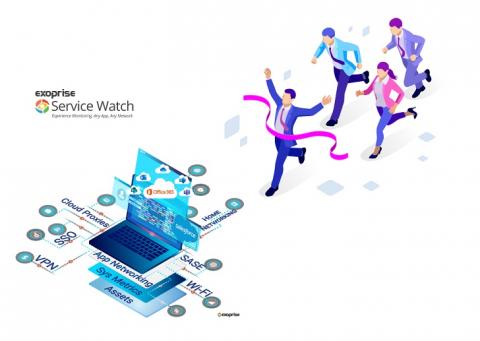
Digital Experience Monitoring (DEM) solutions like those from Exoprise monitor SaaS and custom web applications behind the firewall or cloud to deliver optimal performance to end-users. In a survey done by Forrester, 51% of technology teams and individuals are now objectively managed on providing the right technology to improve and manage the end-user experience. While the onset of COVID may have led companies to restructure a year ago, the same companies are now presented with new challenges to support a hybrid workforce and retain the best employees.
Docker containers have taken the software industry by storm. Ever since its launch in 2013, Docker’s usage and popularity have grown at a rapid pace. Docker has saved organizations from the challenges of managing dependency and version conflicts across multiple environments by providing a portable, secure, and (most importantly) reliable container technology for shipping applications.
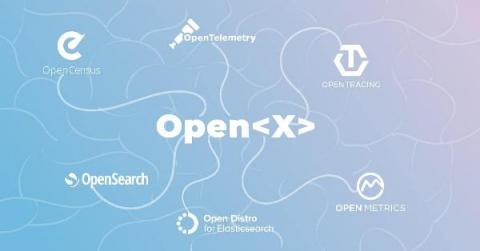
Do you also find yourself confused by all the Open-this and Open-that names flying around? There are currently a good few Open projects, standards, tools – OpenTelemetry, OpenTracing, OpenCensus, OpenSearch… heck, even my podcast is called OpenObservability! And new Open names seem to be popping up every other day. If you too feel this way, there’s no need. Many feel similarly confused.
Minimizing and automating the path from development and production is necessary in order to stay competitive and keep customers happy. As engineering teams strive to solve this by quickly and efficiently rolling out new features, updates, and bug fixes, continuous integration and deployment (CI/CD) has come to be regarded as an industry best practice. One of the most popular CI/CD solutions is Jenkins, an open-source job execution system.
Once a year we let our imagination go wild for a whole week during our annual Hackweek event. It’s where we come up with product updates, like dark mode support, design them and implement prototypes. The mobile engineering team came up with the idea for a Sentry mobile app that focuses on Release Health. We wanted to give developers a concise but comprehensive view of if a release was healthy, errored, or experiencing abnormal crash sessions across multiple projects.
No matter what you’re using Kubernetes for, visibility into your applications’ performance and activity is a beneficial and often essential undertaking – essential, but colossal, requiring entire teams dedicated to nothing but maintaining deployments, auditing, debugging, and keeping up with compliance. Kubernetes has robust support documentation dedicated exclusively to assisting customers with Monitoring, Logging, and Debugging.