Operations | Monitoring | ITSM | DevOps | Cloud

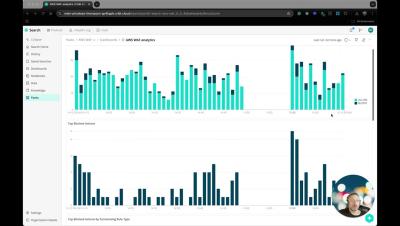
Error Analysis in Honeycomb for Frontend Observability Now in Public Beta

You just shipped your latest frontend release. It passed QA, CI ran, and it looked great in pre-production. But now it’s live and users are hitting an unexpected error: TypeError: undefined is not a function in Chrome. Your error tracking tool flags the exception. You get a stack trace, some breadcrumbs, maybe a session replay.

Why Sustainable Cloud Starts With The Bottom Line - Not Before

If you want to align green awareness with bottom-line impact, start by looking at your cloud waste. Not just as a budget problem, but also as wasted energy, because that’s exactly what it is. AI, especially, is a mounting factor. Deloitte’s Tech Trends 2025 report highlights the growing energy demands of large AI models, warning that electricity use in data centers could soon rival that of entire nations like Sweden or Germany.

APM vs observability: why your definitions are broken

Recently I was asked to offer my opinions on Application Performance Management (APM) and Observability (o11y) - how they overlap, compete, and conflict. I was just one of several folks who's ideas were solicited, so (understandably) some of my thoughts were left out of the original article. HOWEVER, I'm never one to let good words (or at least a lot of words) go to waste, so I thought I'd pull them together here.

RITA: The Chatbot Alternative That Doesn't Waste Your Time

After years of overhyped pilots and half-baked “AI” assistants, IT leaders are increasingly skeptical of chatbot vendors pitching the same old logic trees that are disguised by prettier interfaces. These leaders don’t want another script engine in Slack; they want fewer tickets, faster resolution, and better employee experiences. That’s where RITA comes in. RITA isn’t just a chatbot alternative.

Observability trends in Brazil: insights from our localized survey

Organizations in Brazil are eager to adopt some of the latest observability trends and technologies as they look to keep their software running as smoothly as possible, according to analysis of a micro survey recently conducted by Grafana Labs. Observability is an evolving space, and this is the first time Grafana Labs has run a Brazilian version of our annual Observability Survey.

Signals: Using Jira + Git Activity to Automatically Flag At-Risk Work

Jira issue status is often...wrong. Or at least misleading. If you're a project, product, or engineering manager, you need something more reliable to understand if work is going to land in time (and what needs your attention). Using Signals, available in Git Integration for Jira Advanced Edition, you get an activity-based view of what's actually going on with Jira issues.

15+ Best Docker Alternatives For Containers And Beyond

Although container-related technology existed before 2013, Docker revolutionized and propelled it into the mainstream. Using Docker, developers could automatically create containers from application source code, share libraries, and reuse containers. Docker enables you to track container image versions, roll back to an earlier iteration, and track who built a specific one. You can even upload only the deltas between two versions.

"We're Done with Teams!": Why Europe's Break with Big Tech Matters for Developers

As European governments from Denmark to Germany phase out Microsoft in favor of open-source alternatives, a quiet revolution is reshaping the global tech landscape. What does this mean for developers, and is digital sovereignty the future or just political theater? We spoke with Nikolay Gushchin, Senior Software Engineer at Marks & Spencer and Toptal consultant with over 8 years of experience building scalable systems for Fortune 500 companies, to understand how this shift impacts the development community and what it signals about the future of technology.

Why Software Companies Should Never Skip Over Physical Security

In the software industry, most conversations about security revolve around firewalls, encryption, multi-factor authentication, and patch management. While these digital measures are essential, physical security often gets left in the shadows. For many software companies, this oversight can be costly, not just financially, but in terms of trust, compliance, and operational continuity.