Super Speed with Phantom Slash Commands
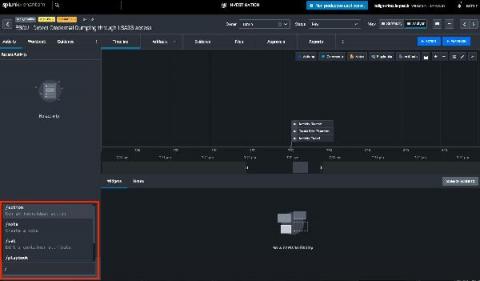
Are you the type of person who loves the command-line? Is tab-complete your friend? Do you move faster on a keyboard than with a mouse? Then Phantom Slash Commands are for you!


Are you the type of person who loves the command-line? Is tab-complete your friend? Do you move faster on a keyboard than with a mouse? Then Phantom Slash Commands are for you!
For the third interview in our series speaking to technology and IT leaders around the world, we’ve welcomed experienced CTO Charles Edge of Bootstrappers.mn to share his journey on becoming a CTO twice over as well as his work as an author of twenty books and host to three podcasts, The MacAdmins Podcast, Jamf After Dark & The History of Computing.
June 14th, 2021: Canonical and Google Cloud today announce Ubuntu Pro on Google Cloud, a new Ubuntu offering available to all Google Cloud users. Ubuntu Pro on Google Cloud allows instant access to security patching covering thousands of open source applications for up to 10 years and critical compliance features essential to running workloads in regulated environments. Google Cloud has long partnered with Canonical to offer innovative developer solutions, from desktop to Kubernetes and AI/ML.
Much of the fuel for today’s business organizations is comprised of cloud computing and digital and SaaS applications. So, if something goes wrong with them, there will be a grave impact on productivity, customer satisfaction and even loyalty, as well as on the costs required for resolving the incident, remediating damage, and getting back to business.
Sensu creator and Developer Advocate Todd Campbell recently wrote about using LDAP authentication for single-sign on (SSO) with Sensu Go. That post provided a great overview of Sensu authentication and included some useful LDAP troubleshooting tips. In this post, we'll focus on the Sensu LDAP implementation and explore how SSO/LDAP users are linked to RBAC "profiles" (i.e. Roles and ClusterRoles). We'll also demonstrate how Sensu supports multiple LDAP providers thanks to its groups_prefix feature.
How many days off have been marred by debugging race conditions and deadlocks in complex multithreaded, Java code? You’ve probably vowed, Never again and embarked on a quest to always catch race condition errors early by writing tests and debugging. Multithreaded applications are a great way to improve performance, but they also make routine tasks like debugging a little more complicated.
Waltham, MA - June 10, 2021 - Exoprise, a leading provider of Digital Experience Monitoring (DEM) solution for Microsoft 365, today announced that BCD Travel, a provider of global corporate travel management services, has selected Exoprise to help the company achieve end-to-end visibility of critical Microsoft 365 SaaS application performance to enhance the digital experience, collaboration, and productivity of a large remote workforce.
Migrating your on-prem infrastructure to the cloud offers a host of benefits, including scalability, mobility, security, and cost reduction. When it comes to cloud network monitoring, tracking the availability and performance of the cloud services your applications rely on becomes even more important. However, moving from self-managed infrastructure to third party–managed services introduces a number of challenges.
Five worthy reads is a regular column on five noteworthy items we’ve discovered while researching trending and timeless topics. In light of rising concerns over cloud cybersecurity, this week we explore the concept of confidential computing. The past year has seen strong adoption of cloud technologies due to accelerated digital transformation and a cloud-first approach in business.
OpenSearch has been a buzz in DevOps over the first half of 2021. The project is moving forward, but understandably there are a lot of questions. This article will address some of those frequently asked questions, and will be updated to address more over time.