How to create a Status Page for your business in under 3 minutes?
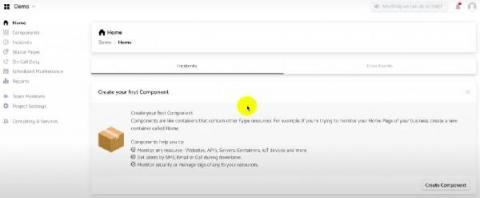
Hello and welcome to Fyipe. In this post, I will show you how you can create a status page in under 3 minutes.


Hello and welcome to Fyipe. In this post, I will show you how you can create a status page in under 3 minutes.
Here at Datadog, we have always strived to build monitoring tools that are robust yet flexible. We are committed to continued innovation, and we believe that when it comes to creating new solutions that complement our customers' existing workflows, our work is never done. That’s why we’re excited to announce that Timber Technologies, the company behind Vector, is joining Datadog.
OpenTelemetry is a CNCF project that standardizes observability (logs, metrics, and traces) across many languages and tools. Today we will look at how we can use the OpenTelemetry .NET library to instrument a .NET 5.0 web API, to offload traces to Tempo and logs to Loki in Grafana Cloud. Grafana Cloud now has a free plan. Set up your account and follow along!
We’ve all been watching closely as the Solarwinds hack, known as SUNBURST, gets its due analysis. This attack was sophisticated and rightfully should concern any company. Companies are now — or should be — considering not only what products they are using but to what attack vectors those products are exposed that unduly extend attack surfaces. Solarwinds makes great products — I’ve used them for years.
cf-remote is a tool for downloading and installing/deploying CFEngine. It automates a lot of the things you have to do before CFEngine is actually installed on your infrastructure, such as provisioning cloud instances, downloading CFEngine installers, copying them to remote hosts and installing / bootstrapping. To make it as easy as possible to get started with cf-remote and CFEngine, it is now available on pypi.
Documentation is a roadmap. It gives us the safest route to reliable, performant code. And just as maps are updated to reflect changing infrastructure, we update our documentation to give you the best way to purposefully use Sentry. In our latest edition of Dogfooding Chronicles, we use Discover to root out the bane of all companies everywhere: the 404 page.
The first two posts in our compliance blog series focused on managing compliance through automation. In this third post, we take a step back to explore a more foundational — but no less important — topic: What’s the difference between compliance and security? Is compliant infrastructure secure infrastructure? People often talk about compliance and security as though they’re one and the same.
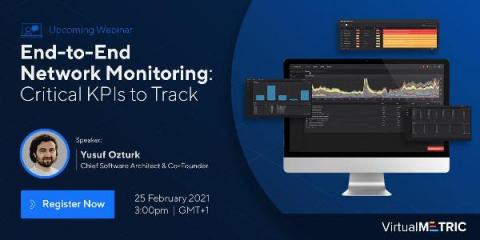
The IT network stays at the foundation of all the operations and data transfers within your business. Unreliable network or problems with the network performance may have a severe impact on your business. Running a business requires a robust and secure network, that managed effectively to meet all the necessary performance and security goals. The standard network monitoring is not enough in the digital transformation era.
At LogicMonitor, we deal primarily with large quantities of time series data. Our backend infrastructure processes billions of metrics, events, and configurations daily. In previous blogs, we discussed our transition from monolith to microservice. We also explained why we chose Quarkus as our microservices framework for our Java-based microservices. In this blog we will cover.
For those of you who aren’t familiar with AWS CodePipeline, it’s a continuous integration and continuous delivery (CI/CD) framework that enables application development teams to deliver code updates more frequently and reliably. You may have also heard it being called a CI/CD or DevOps pipeline. These pipelines have always traditionally been used to deploy the components of a certain application whenever new code in “checked-in”.