Operations | Monitoring | ITSM | DevOps | Cloud

Logging Best Practices Part 4: Text-based logging

Isn’t all logging pretty much the same? Logs appear by default, like magic, without any further intervention by teams other than simply starting a system… right? While logging may seem like simple magic, there’s a lot to consider. Logs don’t just automatically appear for all levels of your architecture, and any logs that do automatically appear probably don’t have all of the details that you need to successfully understand what a system is doing.


Getting Github Data with Webhooks (Part 2)

After my last blog around sending Github Data to Splunk via Webhooks, I received a healthy amount of feedback that I want to address here. I learned that (unsurprisingly) a lot of customers are curious about, or dependant on, other cloud platforms out there. In fact, I heard directly from some customers who specifically cannot use any other cloud platforms than one in particular that was not highlighted in my last blog.

Unfolding the Twitter security incident

In case 2020 wasn’t dystopian enough, here’s some more unbelievable news. On July 15, 2020, social media giant Twitter admitted it fell victim to a security breach. The attackers targetted 130 Twitter accounts, including several belonging to high-profile individuals such as elected officials; former president Barack Obama; and business leaders including Bill Gates, Jeff Bezos, and Elon Musk.

Instrument your Python applications with Datadog and OpenTelemetry

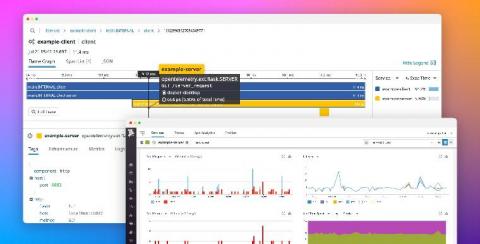
If you are familiar with OpenTracing and OpenCensus, then you have probably already heard of the OpenTelemetry project. OpenTelemetry merges the OpenTracing and OpenCensus projects to provide a standard collection of APIs, libraries, and other tools to capture distributed request traces and metrics from applications and easily export them to third-party monitoring platforms.

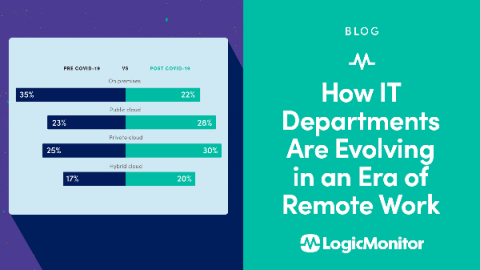
How IT Departments Are Evolving in an Era of Remote Work

Maintaining business continuity is both more difficult and more important than ever in the era of COVID-19. Typically, IT departments evolve their approaches and technologies over time to meet the needs of customers. But that approach may soon be outdated thanks to the global pandemic.

How to maximize span ingestion while limiting writes per second to a Scylla backend with Jaeger tracing

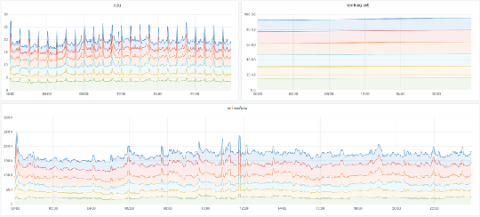
Jaeger primarily supports two backends: Cassandra and Elasticsearch. Here at Grafana Labs we use Scylla, an open source Cassandra-compatible backend. In this post we’ll look at how we run Scylla at scale and share some techniques to reduce load while ingesting even more spans. We’ll also share some internal metrics about Jaeger load and Scylla backend performance. Special thanks to the Scylla team for spending some time with us to talk about performance and configuration!

Automate Release Management with the Sentry Release GitHub Action

Time trolls people. It speeds up in good times and slows down in bad. For instance, when you push code, your brain feels like it’s in a whirlwind. But when you’re debugging subsequent errors, the hours seem to slog by. This is particularly true if you are operating without context and without the help of automation. Fortunately, our friends at GitHub built an automation platform for products like Sentry to integrate with: Sentry Release GitHub Action.

Take Control of your DevOps Dumping Ground with Relay!

As the automation surface area grows to accommodate hundreds of interconnected APIs on the cloud, developers are using their own, home-grown “digital duct tape” to manage a growing “DevOps dumping ground”. For a lot of organizations, home-grown glue logic is inconsistent, not repeatable, and expensive to maintain hundreds of event-based workflows and thousands of combinations. We believe that the answer lies in automation workflows.

How Digital Transformation Has Evolved Through COVID-19

There’s no debating the value of digital transformation when it comes to optimal business performance, but for many IT leaders, some digital initiatives are pushed to the backburner due to other priorities. Over the last few months, COVID-19 has forced a number of those initiatives to the top of the list. From businesses transitioning to remote work, to schools closing, to travel plans being canceled, no one was fully prepared for what the world would face this year.