Operations | Monitoring | ITSM | DevOps | Cloud

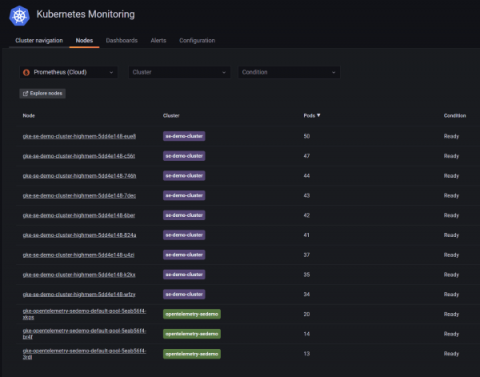
How to monitor the health and resource usage of Kubernetes nodes in Grafana Cloud

The spine is essential to perform every activity, like crawling, walking, or swimming. Just as the spine is necessary to enable these functions, your Kubernetes infrastructure needs a backbone to be efficient and effective. So if Kubernetes clusters act as the spine of your architecture, then Kubernetes nodes are like the vertebrae — they make up a Kubernetes cluster in the same way the vertebrae form the spinal column.
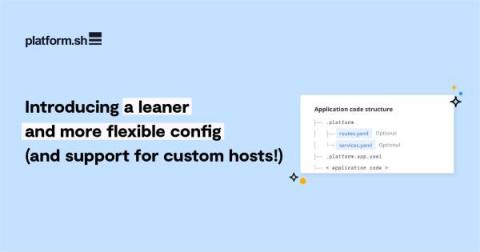

Introducing a leaner and more flexible config (and support for custom hosts!)

To make the developer experience as smooth as possible, we are simplifying the onboarding process. Howso? By making the Upsun configuration files optional (zero configuration!). Due to popular demands, we’re also giving you a simple way to control custom DNS entries directly in the YAML configuration files (see below). Previously, if you started from one of our many ready-to-use templates, those YAML files were automatically included.

Documenting your APIs with developer API portals

Developers need all the information they can get on APIs to get them to work in alignment with their vision. There is no dearth of knowledge in the software development industry today, but only when that knowledge is documented well is it of use to others. In the context of APIs, developer portals offer an effective way to document and communicate relevant information. In this article, we answer the following questions about developer API portals.

IT Horror Stories: How Unpatched Software Hurts Businesses

Leaving software unpatched is one of the most basic, unforced errors an executive can make, but companies large and small keep learning this the hard way. Keeping software up-to-date is harder than it seems, so even when execs are aware of the importance of patching, the sheer volume of needed fixes and the high error rate mean that not every company stays protected.

Dashboards vs. Reports: How to Get the Most out of Your ITSM Reporting Tools

At this point, we all know that reporting is an essential part of ITSM. It helps us to have clear information about the performance of the service desk and the support team and thus make better decisions. ITSM reporting tools consist of dashboards and reports, and though it might seem great to have only two, this often poses a question: when should I use each one? If you find yourself having a hard time deciding, this article is perfect for you! We’re about to oppose dashboards vs.

Introducing the New Snyk App for Bitbucket Cloud

This post is authored by Marco Morales, Partner Solutions Architect, and Sarah Conway, Director of Partner Marketing, at Snyk. We're excited to announce a new Snyk App for Bitbucket Cloud. Snyk first announced this integration in June 2021, which brings Snyk scan results into the Bitbucket Cloud environment so you can identify vulnerabilities as they emerge, right next to the code in your everyday workflow.

Announcing New GitHub Actions + Honeycomb Integration Guide

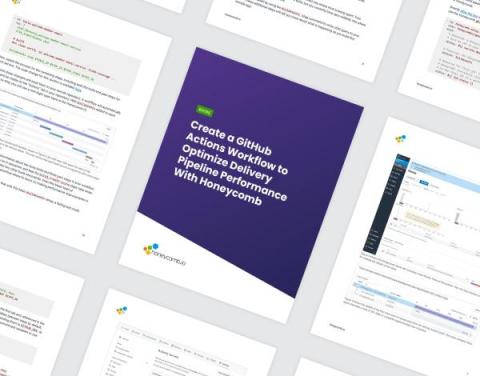
If you build or maintain code in GitHub, the Honeycomb Buildevents Action can help you optimize the performance of your build pipelines in GitHub Actions. This blog introduces you to the gha-buildevents Action and a new hands-on quickstart guide that will show you the inner workings of GitHub Actions workflows, the buildevents tool, and the Honeycomb UI.

Intelligently Monitor Your Work From Home Infrastructure for Business Continuity

Working remotely has become the norm globally for businesses, specifically in regards to IT. Many companies have offices spread throughout the world, decentralized employees or contractors, or simply have a flexible work from home (WFH) policy. Remote work is an aspect of digital transformation that is often left out of conversations when it comes to ensuring business continuity and driving growth, despite research indicating that everything will continue to push towards hybrid work environments.

Webinar: AIOps in healthcare

Healthcare around the world is constantly evolving. The amount of data being generated daily from every appointment and interaction, no matter how small or large, needs to be processed and analyzed in order to improve patient outcomes. The data must be accurate, stored, accessible and secure. Without a core infrastructure of smart IT, any outcomes are extremely challenging to generate, and data must be available in seconds for doctors to make life-saving decisions. The bottom line?