For the last couple of years, most of us have been working from home. Pandemic has changed the world of networking and events. Events went virtual because of lockdowns. Now they’re becoming in-person again. These events are a great way to drive new business. Exhibiting at shows can be expensive, but you can achieve a lot as an attendee. You’ve probably spent quite some time building your digital presence in the last couple of years.
HAProxy is generally the frontend layer of your application, which means it plays a critical role since all traffic first lands on this layer. Because of this, you need to make sure everything is working at this layer all the time, as any issue can directly impact your business. Therefore, having visibility on this layer is crucial. Visibility can come from two aspects: the metrics HAProxy emits and the logs it generates while handling requests.
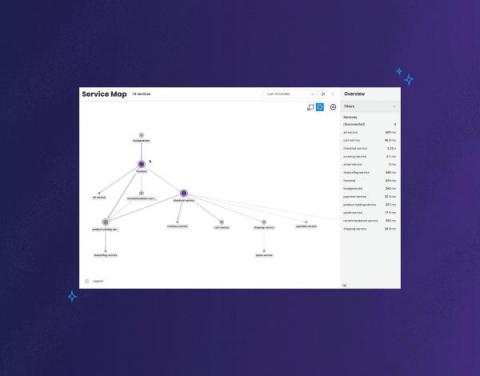
Today, we're announcing the launch of Honeycomb Service Map. This isn't your grandparent's version of a service map. This feature reimagines what it is that you want to know or investigate when looking at visualizations of how your services communicate with one another.
Shopping—as we once knew it—has changed forever. And with it, the art and science of providing the right product at the right place and time has become even more complicated for retailers everywhere. In an ever-competitive retail landscape, customers—often impatient with chronic out-of-stocks and other supply chain disruptions—now expect shopping experiences that are more unified, personalized, and address their immediate needs.
You might think that colocation has been replaced by the cloud. But that’s only true in marketing terms. The reality is that colocation and the role it plays in modern edge computing has never been more important or more required. Believe it or not, cloud computing doesn’t happen in the actual sky – it happens in a data centre. And knowing where that data centre is, and how fast it links to your network and the internet, can be challenging with hyperscalers.
When it comes to cloud computing and the migration of services to the public cloud, we’ve been hearing the hype for years. “Just migrate to the cloud and everything will just work. Things will be bigger, faster, cheaper, and better.” The reality is that a migration to the cloud can result in serious disappointment from unrealistic expectations.
Microservices are distributed applications deployed in different environments and could be developed in different programming languages having different databases with too many internal and external communications. A microservice architecture is dependent on multiple interdependent applications for its end-to-end functionalities. This complex microservices architecture requires a systematic testing strategy to ensure end-to-end (E2E) testing for any given use case. In this blog, we will discuss some of the most adopted automation testing strategies for microservices and to do that we will use the testing triangle approach.