Operations | Monitoring | ITSM | DevOps | Cloud

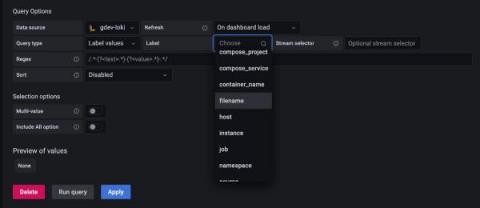
Grafana 9.2: Create, edit queries easier with the new Grafana Loki query variable editor

As part of the Grafana 9.2 release, we’re making it easier to create dynamic and interactive dashboards with a new and improved Grafana Loki query variable editor. Templating is a great option if you don’t want to deal with hard-coding certain elements in your queries, like the names of specific servers or applications. Previously, you had to remember and enter specific syntax in order to run queries on label names or values.
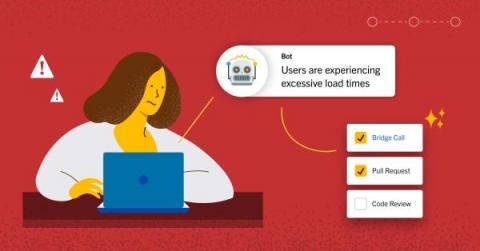

How to implement a mature incident response strategy

In 2021, the Biden administration issued an executive order outlining that the government and private sector need to work together to combat cyberthreats and improve the nation’s collective cybersecurity stance. As cyberattacks become more common and more costly, the United States — like other nation-states — needs to do everything it can to prevent attacks and rapidly respond to them when they occur, which requires modernizing its approach to incident response.

A Deep-Dive Into PagerDuty's New Incident Workflows

It doesn’t matter if you’re a startup or in the Fortune 500: cost optimization, tool consolidation, and efficiency efforts are top of mind. Removing toil and automating more often during the incident response process doesn’t only help teams resolve faster, it also helps them become more efficient. In a resource-strapped world, protecting developer and responder time and focus is critical to reducing total cost of operations and optimizing customer experience.

MSP Fails, and How to Avoid Them!

“All happy successful MSPs are alike—each MSP fail is a fail in its own way.” That IT spin on the Anna Karenina principle pretty much sums up what we’ll cover here (but keep reading, it’s good stuff!). To be a successful MSP, you have to nail the financial, marketing, customer service, and tech sides of the business. All successful MSPs are “alike” in that way. On paper, that sounds simple enough.

Data Center Power Chains: AC vs. DC

In a data center, the power chain is the sequence of infrastructure equipment that distributes power from its source all the way to the IT devices. Most data centers use alternating current (AC) power, though telecommunications companies typically use direct current (DC) power. There are pros and cons to each, and they require different equipment.

Optimize Trace Memory with Scout

Application performance monitoring (APM) is a process of monitoring and analyzing performance issues within an application. In monolithic architecture, monitoring the performance of an application using APM tools was straightforward. However, once the application adopts microservice architecture, the application becomes more complex, and the business functionalities flow into different microservices to complete the workflow.

Deploy Django apps to AWS Elastic Beanstalk

Your software development team has an enormous number of tools available to them. Some older tools are being used in new ways, which has inspired the creation of more new tools to choose from. For example, JavaScript has grown from a language used to add interactivity on websites to a full-stack language for both frontend and backend needs. JavaScript has paved the way for Express, Nest.js, and many others.

Cloud 66 Celebrates 10-year Anniversary

Cloud 66 turned ten this year! While this is a big deal for us, I understand that it is not important to you. After all, who cares if a company turns 10, right? So, why am I writing about it, and why do I think you might also be interested in this? Since we started Cloud 66 in 2012, we and the world around us have changed significantly. We are no longer a scrappy startup with only big dreams to keep us going. Today, hundreds of customers rely on us daily for critical parts of their business.

Data Quality Explained: Why Quality Is Critical to Using Your Data

Much like wine (😉), having data doesn’t mean you have quality data. Today it's easier than ever to get data on almost anything. But that doesn’t mean that data is inherently good data, let alone information or knowledge that you can use. In many cases, bad data can be worse than no data, and it can easily lead to false conclusions. So, how do you know that your data is reliable and productive? This is what we call data quality.