Understand the two dimensions of scaling for database query and ingest workloads, and how sharding can make scaling elastic — or not. Scaling throughput and performance are critical design topics for all distributed databases, and sharding is usually a part of the solution. However, a design that increases throughput does not always help with performance and vice versa. Even when a design supports both, scaling them up and down at the same time is not always easy.
Most engineering teams are no strangers to key performance indicators (KPIs), those metrics tracking progress toward critical goals and targets. Ideally, tech leaders design KPIs to focus teams on what matters and prove their contribution to the company’s overall performance. Of course, KPI data should also uncover critical information that guides informed decision-making. For engineering teams tasked with managing the customer experience, KPIs often track availability.
The drive for faster, more scalable services is on the rise. Our day-to-day lives depend on apps, from a food delivery app to have your favorite meal delivered, to your banking app to manage your accounts, to even apps to schedule doctor’s appointments. These apps need to be able to grow from not only a features standpoint but also in terms of user capacity. The scale and need for global reach drives increasing complexity for these high-demand cloud applications.
On 10th December 2021, Apache foundation admitted the Log4Shell vulnerability of its Log4j 2.16 version. Chen Zhao Jun was an Alibaba cloud services security analyst who first found out about this security threat and consequently reported it to the foundation. Upon further investigation, they identified that the vulnerability had existed since 2013. Unfortunately, by then all the corporations, big and small were affected by this malicious security breach.
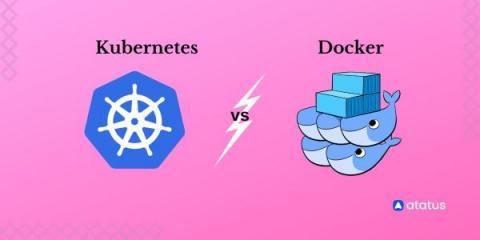
Docker is a PaaS product, developed by Docker.Inc to containerize applications. It does so by combining app source code with OS libraries and dependencies required to run that code in any environment. Kubernetes is a similar tool developed by Google, which scales up this containerized application after deployment. While one works in building the containers the other essentially helps in scaling it up, then why so much buzz around these two?