In the first part of our series on Building, Deploying, and Observing SDKs as a Service, we delved into the world of APIs and successfully deployed our own REST APIs by wrapping the existing pet store APIs. Now, it’s time to take our journey further and unlock the true potential of SDKs. In this second part, we’ll explore how to build an SDK for the pet store API using the OpenAPI spec and the OpenAPI Generator project.
In the dynamic landscape of IT service management, ITSM, two concepts reign supreme - Incident Management and Problem Management. They might seem similar, and many use these terms interchangeably, but they serve distinct purposes. Through this article, we’ll navigate the nuanced differences between Incident Management and Problem Management, and apply these concepts in our own approach to incident management.
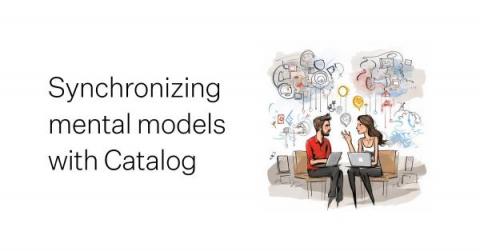
In the heat of an incident, having a clear and shared understanding of what’s going on is absolutely crucial to effective response. But often what actually happens is that people involved in incidents build their own picture and narrative of the event, shaped by their own expertise, their past experiences, and what they’re seeing and hearing as the incident develops. The pictures and perspective people build is often referred to as a mental model.
Artificial intelligence (AI) is one of the hottest topics in the world today, there are so much potential for this technology to help all sorts of Enterprise challenges. HEAL has been a leader in leveraging AI to help IT operations management for years. Our customers include some of the largest banks to the largest telcos in the world, working with them has enabled us to strengthen the AI in our core product to address many of the challenges faced by corporations large and small.
For technical teams, the findings from DORA provide a model for measuring and improving performance. With almost a decade of data gathered from more than 33,000 professionals worldwide, the capabilities and frameworks detailed by the research help teams pinpoint areas for improvement and areas to celebrate. The team at DORA categorizes capabilities into three sections: Technical Capabilities, Process Capabilities and Cultural Capabilities.
In the vast universe of cloud computing, data transfer operations serve as the lifeline of your day-to-day tasks. Whether it’s migrating data to the cloud or distributing data across various storage accounts, data transfer plays a vital role. Microsoft’s Azcopy is a lifeline for those who require a robust, reliable, and efficient tool for their data transfer needs, particularly to and from Azure Storage.
“So you get paged and wake up in the middle of the night, you don’t know what’s going on, and there you are needing to figure things out — What kind of tabs do I need open? Where do I find the logs? Where are the dashboards and the metrics?” If you’ve ever been on call, this refrain, voiced by Alexander Rösel, Senior Software Engineer at Ultimate, will sound all too familiar.