Operations | Monitoring | ITSM | DevOps | Cloud

Coralogix vs Elastic Cloud: Support, Pricing, Features & More

With various open source platforms on the market, engineers have to make smart and cost-effective choices for their teams in order to scale. Elastic Cloud, and its flagship product Elasticsearch, are one of several options available, but how do they compare to a full-stack observability platform like Coralogix? This article will provide a complete breakdown between Coralogix and Elastic Cloud, from essential industry features, like logs, metrics and traces, to pricing models and support services.
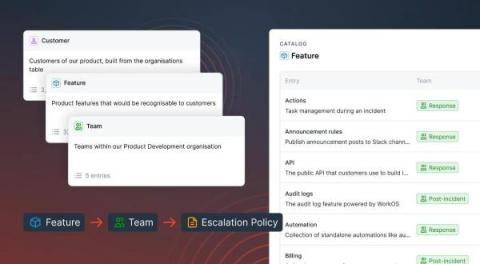

Announcing Catalog - the connected map of everything in your organization

One of the most painful parts of incident response is contextualizing the problem and understanding how and where it fits within your organization. If responders are unable to answer basic questions such as: Then you waste valuable time talking to the wrong people or solving the wrong problems — ultimately extending impact and hurting your response. It’s a common issue that, up until now, didn’t have a clear solution or workaround.

ChatGPT: Friend or Foe? Protect your dev team from the Dark Side!

It’s no surprise that AI is rapidly becoming the most powerful tool for developers. The ease of use and accuracy of such tools can even generate code snippets for a website written entirely on a napkin! While the potential of AI is exciting, it is crucial to address the potential vulnerabilities that bad actors can exploit within AI systems.

Your Starter Guide to Using the HAProxy Lua Event Framework

In this article, we’ll take you on a quick tour of the new Lua event framework shipped with HAProxy 2.8—plus demonstrate how Lua helps you further customize HAProxy’s behavior. We’ll start with a brief, high-level overview of Lua and how HAProxy uses it. Next, we’ll introduce you to the Lua event framework, show you what you can do with it, and familiarize you with its mechanics.

From Expense to Excellence: Transforming ITOps in 2023 through Strategic IT cost optimization

Most organizations view their tech and network operations center and their budgets as simply the cost of running their internal and external IT services. However, through IT cost optimization, you can improve how your Ops center team responds to service issues and save valuable resources too. So, what specifically is IT cost optimization?

Streamlining Observability: The Journey Towards Query Language Standardization

One of the most captivating discussions I had at KubeCon Europe 2023 in Amsterdam was about standardization of a query language for observability. This query language standard aims to provide a unified way of querying observability data across logs, metrics, traces, and other relevant signals. The conversation shed light on the pressing need for a standardized approach to overcome the challenges posed by the plethora of query languages currently in use.

Data Independence Day: Taking Back Control of Your Data!

On July 4th we celebrate. We celebrate freedom of movement, freedom of assembly, removal of excessive taxation, and much, much more. But what about digital independence? Removing the tyrannical yoke of control over your observability data. Authoritarian vendors restrict access and movement; they dictate proprietary formatting and even limit what can be commingled with your data, then apply enormous tax burdens (i.e. license fees) just to store your data.

How To Transition To Cloud Cost Optimization 2.0

But many businesses don’t have insight into where that money goes and whether or not they’re pricing their products accordingly. CloudZero Founder and CTO Erik Peterson sat down with Erik Carlin, Founder and CPO at ProsperOps, to talk about the transition in cloud cost optimization from 1.0 to 2.0. They explored what data engineering teams need to make informed buying decisions, how to turn data into actionable intelligence, and why you should view cloud costs as an opportunity for ROI.

Stop Overspending and Optimize Your Cloud Costs with Advanced Anomaly Detection

“Time is money” couldn’t be truer than in managing cloud costs. By way of proactive anomaly detection, a chance is given to save time that could have been spent on issue recognition and resolution. Anomaly detection for the Cloud can be tricky since there can be changes in prices & data on billing history anytime. Not to mention, seasonality can mess things up as well.