Operations | Monitoring | ITSM | DevOps | Cloud

Three Pillars of Observability [And Beyond]

Observability is often defined in the context of three pillars: logs, metrics, and traces. Modern-day cloud-native applications are complex and dynamic. To avoid surprises and performance issues, you need a robust observability stack. But is observability limited to collecting logs, metrics, and traces? How is observability evolving to make our systems more observable? In this tutorial, we cover.

Monitor Your NGINX Webserver with Telegraf

Monitoring your instance of NGINX gives you insight into your webserver's requests and connections. These insights can help in identifying performance bottlenecks, optimizing configurations, and ensuring efficient load handling. Monitoring all layers of your technology infrastructure allows for the early detection of potential problems such as server overload, disk space shortages, or network issues.

Uptime.com Achieves Strong Sales and Sustains Rapid Growth & Innovation in 2023

The service company continues to demonstrate market superiority in website and service monitoring, solidifying its status as the preferred provider for unified, dependable solutions for maintaining website availability. PALO ALTO, Calif., December 20, 2023 (Newswire.com) – Uptime.com, a global leader in website monitoring services, proudly announces tremendous sales results for the last two quarters of 2023, marking a new pinnacle in its growth trajectory.

Context isn't just for Christmas

Everyone has their own toys to play with this Christmas, but we all have more fun when we share. The same applies to the tools we use, the data we collect, and the insights we act on. In this video, I'll show you how one of our valued (and definitely real) customers “North Pole Industries” utilizes SquaredUp to share the magic of observability.

The Three FinOps Phases for MVP Success

Your FinOps foundations are down in your company’s cloud (woohoo!), but what comes next? How can you boost your MVP success in the cloud with your FinOps strategy? In this blog post, we’ll briefly dive into the three phases of your FinOps for top-notch implementation from beginning to end. Need a refresher on setting up an MVP FinOps framework for your cloud? In part 1 of our series, we’ll show you how it’s done!

How to Identify DNS Issues: The IT Handbook

In the world of the Internet, where every click, request, and data transfer relies on seamless connectivity, Domain Name System (DNS) issues can be the silent disruptors that bring the entire digital ecosystem to a halt. As organizations and individuals become increasingly dependent on the Internet for their day-to-day operations, understanding and troubleshooting DNS problems have become essential skills for IT professionals.

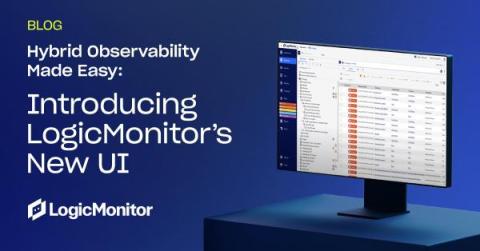
Hybrid observability made easy: introducing LogicMonitor's new UI

IT monitoring is evolving rapidly, and LogicMonitor is at the forefront of this transformation with the release of LogicMonitor’s new user interface (UI). This release marks a significant milestone, reflecting our commitment to innovation, responsiveness to user feedback, and anticipation of future technological trends.

The Power of Distributed Tracing in Shifting Observability Left

This is the second post in a 3-part series about shifting Observability left. If you have not had a chance to read the first, you can find it here. In today’s complex microservices deployments, gaining visibility into deployments is vital for optimal system performance and scalability. This has become even more important as the tech industry has moved toward microservice architecture reliance. Navigating through logs has become increasingly complex as requirements have grown.

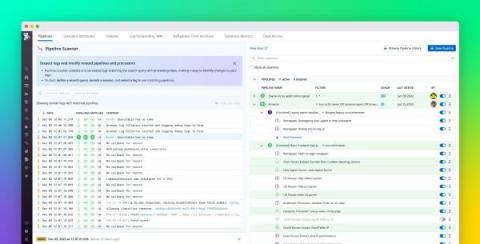
Investigate your log processing with the Datadog Log Pipeline Scanner

Large-scale organizations typically collect and manage millions of logs a day from various services. Within these orgs, many different teams may set up processing pipelines to modify and enrich logs for security monitoring, compliance audits, and DevOps. Datadog Log Pipeline let you ingest logs from your entire stack, parse and enrich them with contextual information, add tags for usage attribution, generate metrics, and quickly identify log anomalies.

Azure Cosmos DB Cost Optimization to avoid unforeseen expenses

Cost optimization is critical to managing any cloud-based service, including Azure Cosmos DB. Azure Cosmos DB is a globally distributed, multi-model database service that allows you to scale your storage and throughput across regions. Although it offers a highly scalable and flexible platform for creating applications, Azure Cosmos DB cost optimization is important to ensure efficient resource utilization, avoid unforeseen expenses, and estimate costs more accurately.