When discussing the technical foundations of observability, several key components, often referred to as the “pillars,” emerge. While there is no universally agreed-upon number of pillars, this post will focus on four fundamental elements: metrics, logs, traces, and profiles. Due to the vast amount of data generated by metrics, logs, and traces, sampling is often employed to reduce data volume while maintaining representative information.
Monitoring and Observability of messaging and middleware has and will continue to be a function of increasing importance and this is especially true for organizations in the Financial Services industry. In the financial services industry, observability refers to the ability to monitor, measure, and analyze the performance, health, and security of financial systems, applications, messaging and middleware which power long running processes in real-time.
There is immense pressure on IT. Now more than ever, IT teams bear the brunt of the seismic shift in how people live and work. Delivering service quality while driving innovation is imperative. Yet, IT teams are continually fighting outage fires, managing day-to-day events, updating legacy systems, and navigating IT complexity – while trying to innovate. AIOps and cloud computing sought to address these challenges.
"Transformative Solution" says a Director of IT in a $30B+ retailer. "Best Monitoring and Observability Tool > Splunk," is how a software engineer in a software company labels it. These are only a couple of the terms our customers use when describing the value they are getting from Splunk. With these descriptions in mind, we are elated that Splunk has been named a Leader in the 2024 Gartner Magic Quadrant for Observability Platforms for the second year in a row in this category.
While major outages like the recent CrowdStrike incident dominate headlines, those of us in the trenches ensuring Internet Resilience know that most of our issues are not necessarily global but localized by geography, autonomous systems, or something else. Micro-outages – those elusive, localized incidents – can pose the most persistent threat to observability.
At Sumo Logic, we’re committed to helping you scale without breaking your budget. As you may have heard, we recently launched Flex Licensing, a first-of-its-kind economic model that offers free, unlimited log data ingest so different teams can capture and analyze critical data across their enterprise in one place. We’re also committed to tackling related challenges raised by other data sources — like metrics.
AWS Transit Gateway costs are multifaceted and can get out of control quickly. In this post, discover how Kentik can help you understand and control the network traffic driving AWS Transit Gateway costs. Learn how Kentik can help you understand traffic patterns, optimize data flows, and keep your Transit Gateway costs in check.
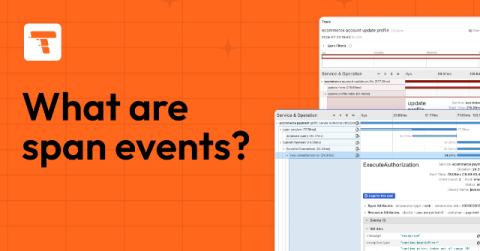
If you’re already familiar with distributed tracing, you know that spans are the building blocks of traces. But are you sleeping on what span events can do for you? First, you may need a wake-up call as to what a span event even is. While spans represent units of work or operation within a trace, a span event is a unique point in time during the span’s duration.
Alerts are a perennial topic, and a CoPE will need to engage with them. The bounds of this problem space are formed by two types of alerts: Understanding what these alerts are and how to configure them is one thing. Thinking about what they each do for your organization, and how using one or the other affects things, is another. The latter will be the focus of this article.