Operations | Monitoring | ITSM | DevOps | Cloud

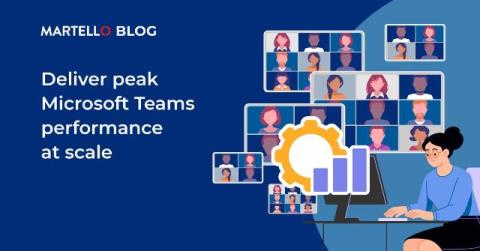
Deliver Peak Microsoft Teams Performance at Scale

Scale is a perennial challenge for most IT teams. While organizations expect the same performance and experience whether 500 users are accessing essential applications or 50,000, IT headcount rarely increases in proportion with organizational growth. This often leaves IT departments overtaxed and pressed to triage the most urgent concerns. But even that requires good data to inform decisions — which can be in short supply.
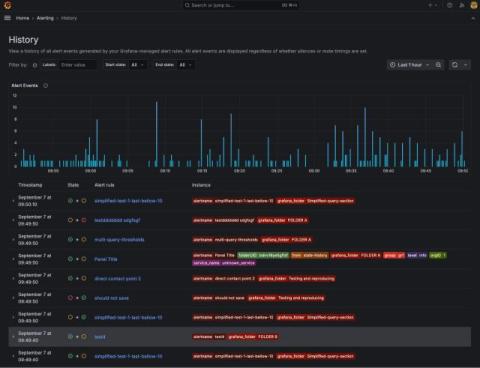
Better root cause analysis: Mastering alert insights with the new central history timeline

A year ago we rebuilt our alert rule state history, using Grafana Loki for storage and updating the UI to display a timeline of all state changes of an alert rule. As a result, users can now conduct better root cause analysis by going down to the level of an alert rule and seeing when certain alert instances started or stopped firing. But we aren’t stopping there. To ensure system stability and avert outages, you also need one place to see the state history for all the alerts in your system.

New Relic vs Grafana - 2024 Comparison

New Relic and Grafana are leading tools in monitoring and observability, each with distinct use cases. New Relic excels in Application Performance Monitoring (APM), providing detailed insights for application performance. In contrast, Grafana is designed for data visualization and monitoring, allowing users to create customizable dashboards for metrics and logs. This article provides a clear comparison of their features, including application performance monitoring, log management, and dashboards.

Nexthink the Clear #1 Vendor in DEX. Whichever Way You Look at It.

This headline is maybe a little surprising, even for Nexthinkers. We’re known for being conservative and letting our work do the talking. Nexthink first created the DEX category, then rolled out the world’s most capable and holistic DEX platform, and then delivered year on year as the most successful DEX vendor in the market. Something to do with our Swiss heritage perhaps – an emphasis on diligence and execution, rather than on singing our own praises.

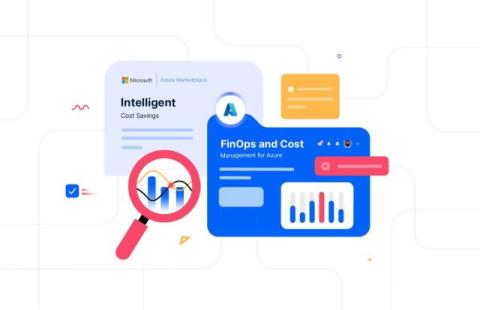
Turbo360 FinOps and Cost Management Is Now Available in the Microsoft Azure Marketplace

Microsoft Azure customers worldwide now gain access to Turbo360 to take advantage of the scalability, reliability, and agility of Azure to drive application development and shape business strategies. Turbo360, an advanced cloud Management platform, today announced the availability of its flagship module, FinOps and Cost Management for Azure, in the Microsoft Azure Marketplace.

Essential Linux Logs To Monitor for System Health

Linux is an open-source operating system kernel originally created in 1991. It has a reputation for being versatile, stable, and secure, hence its wide use on computing devices, beginning from servers and mainframes down to desktop computers, smartphones, and embedded devices. The broad uses for Linux and its popularity have led to the demand for effective monitoring.

Is it Time to Version Observability? Signs Point to Yes

In 2016, we at Honeycomb first borrowed the term “observability” from the wikipedia entry for control systems observability, where it is a measure of your ability to understand internal system states just by observing its outputs. We then spent a couple of years trying to work out how that definition might apply to software systems. Many twitter threads, podcasts, blog posts, and lengthy laundry lists of technical criteria emerged from that work, including a whole ass book.

The Impact of MQ Tuning on Mainframe Performance and Scalability

When it comes to mainframe performance, MQ tuning is often one of the most underrated aspects. We’ve seen firsthand how it can make a significant difference in system performance. In one Project, a mainframe environment was struggling to keep up with the load. Applications were lagging, users were frustrated, and the hardware, despite being robust and well within capacity, wasn’t the issue. It turned out that the MQ systems weren’t configured optimally.

3-Click Indexless Network Monitoring: AWS & Coralogix

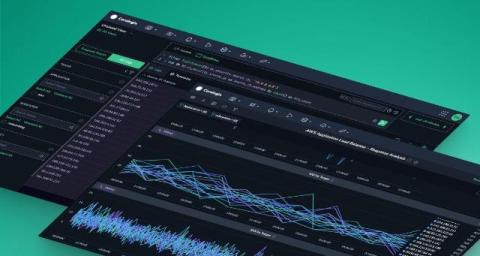
Network infrastructure is the hidden glue between servers. In AWS, it takes skill, knowledge and experience to build a network that can be monitored, will perform and is secure. A key source of information to determine the health of a network is the logs, but network logs suffer from a serious problem. They’re noisy, and they’re often difficult to parse, but by leveraging indexless observability, Coralogix customers can drive insights from data that would previously have been untouchable.

How to Improve Your React Debugging Process

In this guide, you’ll gather how to identify and solve the most common bugs and performance issues. We’ll cover debugging client-side React, if you have a React app that uses server-side rendering, you can also look at our Node.js debugging guide or on-demand workshop. In the below sections you’ll learn.