Operations | Monitoring | ITSM | DevOps | Cloud

Supercharge Your Incident Response With The New Rootly and IsDown Integration

Dealing with disruptions from third-party providers can really disrupt your business operations. As our IT infrastructures become more complex, managing these outages can be quite a headache. If you're a site reliability engineer (SRE) looking for a smoother way to handle these incidents, you'll want to check out the new Rootly and IsDown integration. Rootly is an incident management system that seriously speeds up business response times.
Tame Your Telemetry: Introducing the Honeycomb Telemetry Pipeline

Observability means you know what’s happening in your software systems, because they tell you. They tell you with telemetry: data emitted just for the people developing and operating the software. You already have telemetry–every log is a data point about something that happened. Structured logs or trace spans are even better, containing many pieces of data correlated in the same record. But you want to start from what you have, then improve it as you improve the software.

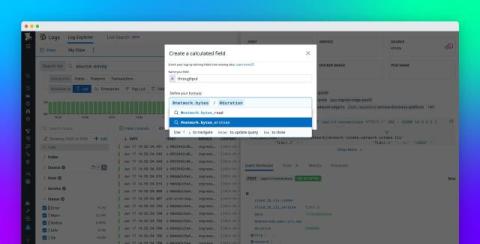
Transform and enrich your logs at query time with Calculated Fields

As the number of distinct sources generating logs across systems and applications grows, teams face the challenge of normalizing log data at scale. This challenge can manifest when you’re simply looking to leverage logs “off-the-shelf” for investigations, dashboards, or reports–especially when you don’t control the content and structure of certain logs (like those collected from third-party applications and platforms).

How OnlineOrNot more than halved its AWS bill

Chances are, you've heard one of the main promises of serverless compute: "you only pay for what you use". While convenient when starting a new project, once you start to get continuous usage on that compute, you start to realize you're paying a hefty premium for that convenience. If you're using AWS Lambda like I am, chances are that "for what you use" part isn't completely true either.

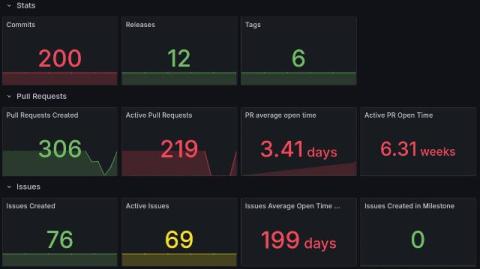
Visualize GitHub repos, projects, and more: get started with the GitHub data source for Grafana

In 2020, we introduced the GitHub data source plugin for Grafana, helping organizations visualize and gain deeper insights into their use of the popular version control and collaboration platform. Since then, thousands of users have installed the data source, and we’ve been working hard to extend its capabilities and make it even easier to use.

Debugging a Django Application

Debugging Django applications can be challenging, but it’s key to keeping your app running smoothly in production. From unexpected bugs to performance slowdowns, finding and fixing issues efficiently keeps users happy and reduces downtime. For example, when an error occurs on a critical page, like a checkout page, identifying the issue quickly is crucial to avoid disrupting user transactions.

Introducing dashboard folders

One of the most common challenges our users face is navigating a growing number of dashboards as their SquaredUp usage increases. That's where dashboard folders come in! We’ve designed dashboard folders to help our users stay organized, even in large and complex environments. Here are some ways we think dashboard folders can improve your dashboard organization and navigation.

The Importance of Monitoring for Gaming Companies

For gaming companies, creating a positive user experience is paramount. Gamers expect seamless gameplay, fast response times, and 24/7 availability. Maintaining top-notch performance is crucial when managing massive multiplayer online games, mobile games, or e-sports platforms. This blog will explain how gaming companies rely on monitoring and explore many widespread monitoring use cases for gaming companies.

MaaS: How to Store and Analyze Real-Time Stock Trading Data Using Next.js and InfluxDB

Next.js is one of the most popular open source web frameworks for hosting web applications; however, performance monitoring of such applications, until now, has been a mystery. Whether you’re hosting Next.js apps yourself or via third party services like Vercel, it’s always helpful to know how the application is performing to make it more efficient and deliver a pleasant user experience.