Operations | Monitoring | ITSM | DevOps | Cloud

Reduce Monitoring Costs: How to Identify and Filter Unneeded Telemetry Data

To understand what’s going on in their environment, DevOps teams usually ship some combination of logs, metrics and traces—depending on which signals they’re hoping to monitor. Each data type will expose different information about what is happening in a system. However, not all of that information will be helpful on a day-to-day basis, which can rack up unnecessary data storage costs. That should require users start to filter telemetry data across their observability stacks.

Best practices for database performance optimization

Proactive database performance monitoring is essential to maintain resource utilization and system performance. As data volumes grow, it is critical to monitor databases properly to deliver a seamless enduser experience, and lower IT infrastructure costs. Pinpointing database issues as they occur can assist in faster troubleshooting, and keeping the health of the application intact. Without monitoring, database outages may go unnoticed, and lead to loss of business reputation and profit.

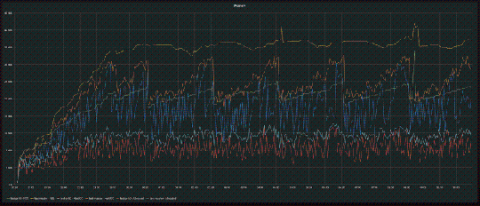
New in Prometheus v2.19.0: Memory-mapping of full chunks of the head block reduces memory usage by as much as 40%

The just-released Prometheus v2.19.0 introduces the new feature of memory-mapping full chunks of the head (in-memory) block from disk, which reduces memory usage and also makes restarts faster. I will be talking about this feature in this blog post.

DIY Tool Website Greenworks Hacked by Self-Destructing Web-Skimmer

Whilst researching recent client-side attacks our security team observed a highly-sophisticated self-cleaning and self-destructing skimmer on the popular hardware tool website Greenworks. The hack was first spotted by RapidSpike’s Client-Side Security Scanner on June 8th, and at the time of writing, the hack is still live on www.greenworkstools.com/.

Introducing Sematext Synthetics for API & Website Monitoring

No matter which path of the stack you work on, it’s crucial you make sure your website or API is up and running. We wanted to create a tool that can give you superpowers. Enter, Sematext Synthetics! You can monitor the availability of APIs and websites as well as their performance, and user journeys. This means 24×7 monitoring from multiple locations around the globe with alerts when things go wrong!

How to categorize logs for more effective monitoring

Logs provide a wealth of information that is invaluable for use cases like root cause analysis and audits. However, you typically don’t need to view the granular details of every log, particularly in dynamic environments that generate large volumes of them. Instead, it’s generally more useful to perform analytics on your logs in aggregate.

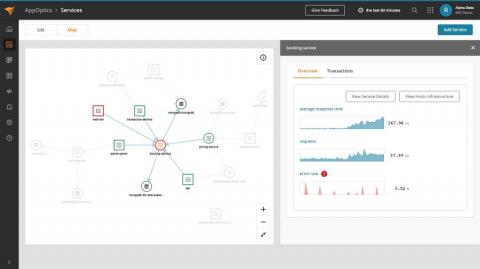
SolarWinds Updates APM Suite Designed to Simplify Application and Infrastructure Management

Introduces new service map and web transaction recorder, enhanced custom parsing rules, and search user experience to further reduce application performance management complexity and speed up troubleshooting.

Contributing Third Party Flux Packages: A Discord Endpoint Flux Function

Are you currently using Flux with InfluxDB? Have you written a great Flux function that would be useful to the community? If the answers to these questions are “Yes!”, then I encourage you to contribute your awesome work to Flux, so that others can appreciate you and your work. Today, we’re sharing how you can contribute a custom Flux function in a Third Party Flux Package.

The evolving application lifecycle: from DevOps to DevSecOps

Every evolution in technology starts with the people behind it. So understanding the context, roles, and objectives that gave rise to DevOps — and now DevSecOps — isn’t just an exploration of timing and technology; it’s central to how we define organizational success. In this post, I’ll recap a conversation I had with Gareth Rushgrove, Director of Product Management at Snyk, a cybersecurity platform that helps developers identify vulnerabilities in their applications.

Best Practices to Minimize Website Downtime

When a customer notifies you that your website is down, it has far more severe consequences than just embarrassment. Website downtime can mean loss of money, reputation, credibility and in a lot of cases, the overall feeling of security of your customers. As a survey report from Gartner showed website downtime can cost nearly $5,600 per minute to some companies. So, what are the issues that can cause website downtime, and how can you prevent it?