Send SCOM Alerts to Slack
Looking to get some traction for urgent alerts? If you’ve got fifteen minutes to follow the below steps you can setup an Alert Subscription that sends alerts directly to Slack.


Looking to get some traction for urgent alerts? If you’ve got fifteen minutes to follow the below steps you can setup an Alert Subscription that sends alerts directly to Slack.
In this write-up of our special webinar, we'll give you an insider’s look into how we took control of our Azure costs, and how you can do the same. We’ll take you through how we identified the problems and implemented lasting solutions to keep things under control. You’ll get to hear from our key stakeholders involved - Finance, Management, IT, Engineering.
Earlier this year, we added a Dashboard API to Cloud Monitoring, allowing you to manage custom dashboards and charts programmatically, in addition to managing them with the Google Cloud Console. Since then, you’ve asked us to provide more sample dashboard templates that target specific Google Cloud services. Many of you have also asked us to provide a Terraform module to help you set up an automated deployment process.
Today, we’ve added a magic dashboard to the Node integration that shows you the performance and volume of your PostgreSQL queries.
Serverless computing has taken off in recent years with more efficient cloud services. AWS Lambda is a great example of this, where provisioning and management of resources happens from the service’s end. You only have to deal with the code. This article will give a brief overview of AWS Lambda in contrast to EC2 instances, then walk through shipping AWS Lambda metrics to Logz.io.
Bounded to service level agreements (SLAs), vendors must monitor performance of their SaaS-based solutions for an optimal user experience. Monitoring performance of a SaaS-based solutions is a challenge since it varies extensively across user locations and geographies. These applications and their content need to travel a rigorous path of geography-specific variables (CDNs, local ISPs, etc.) en route to users. This level of complexity can eventually effect the experiences of end users differently.
Icinga Web is equipped with various features to create and manage custom views in dashboards. We’ve taken not that many users are missing some features for dashboards, like drag and drop and a better sharing functionality. To meet those needs we set ourselves the goal to increase the overall flexibility of dashboards and to add new features that improve the management and sharing functionality.
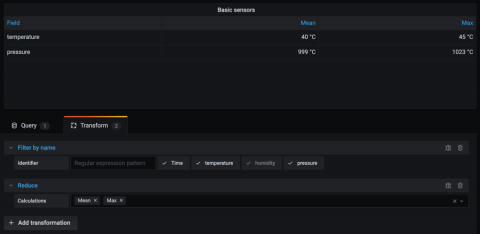
Among the many new features introduced in Grafana 7.0, one of the most exciting ones is transformations. The concept of data transformation is not new to Grafana, but prior to Grafana 7, it was fairly rigid and available only in the Table panel.
Previously on this Azure dashboards series, we covered making dashboards natively in the Azure portal vs. SquaredUp for Azure for VMInsights and AppInsights. In this third and final part we will be comparing our dashboard experiences when it comes to cloud cost management and visualization. We’ve already talked about the resource-level cost dashboards in the previous parts, our main goal in this one is to display costs on the subscription level. Alright, let’s jump straight into it!