Operations | Monitoring | ITSM | DevOps | Cloud

Using Recommenders to keep your cloud running optimally

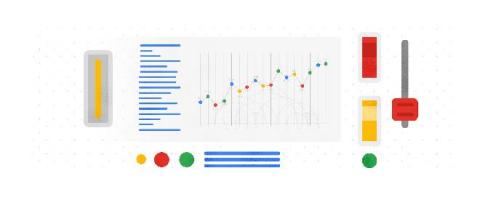
As a cloud project owner, you want your environment to run smoothly and efficiently. At Google Cloud, one of the ways we help you do that is through a family of tools we call Recommenders, which leverage analytics and machine learning to automatically detect issues and present you with optimizations that you can act on.

Connecting the dots with Event Correlation

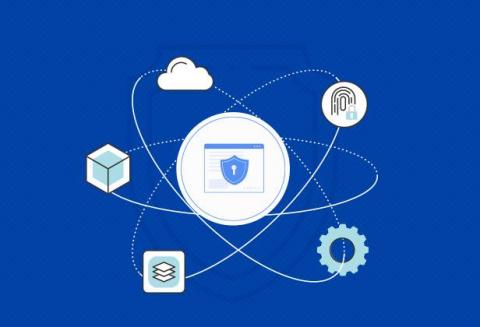
We can’t stress enough on the importance of event correlation in network monitoring. Our customers love correlation! For the love of event correlation we’ve published a blog on why modern organizations rely on event correlation. This is the second blog from the correlation series. You might want to read our previous blog before reading this one.

Monitor Carbon Black Defense logs with Datadog

Creating security policies for the devices connected to your network is critical to ensuring that company data is safe. This is especially true as companies adopt a bring-your-own-device model and allow more personal phones, tablets, and laptops to connect to internal services. These devices, or endpoints, introduce unique vulnerabilities that can expose sensitive data if they are not monitored.

The Impact of Website Downtime on SEO

When your website goes offline there are many factors for you to consider as a priority, such as the loss in traffic and sales and/or leads. However, another factor to consider is how a period of downtime will affect your standing in search engines such as Google. Website downtime correlates directly with lost rankings in search, which in turn leads to a long term loss of traffic for weeks and months after the initial period of downtime.

Capturing and Containing Hidden Cloud Costs-How Overprovisioning Can Hurt Your Budget

The traditional method of planning server, network, and storage capacity is to look at the usage peaks and then add a safety margin. Most cloud hosting is planned this way. The idea that you only pay for what you use is not based on actual usage, rather on the capacities you initially specify. Most cloud migrations involve a ‘lift and shift’ approach of moving an application to a different host with minimal maintenance.

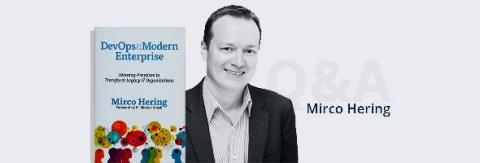
Mirco Hering on Getting Past DevOps Inertia

Mirco Hering is principal director of APAC DevOps and Agile with Accenture. He supports major public and private sector companies in Australia and overseas in their search for efficient IT delivery. Mirco blogs about IT delivery at NotAFactoryAnymore.com and is author of “DevOps For The Modern Enterprise: Winning Practices to Transform Legacy IT Organizations.”

7 Configurations to Enhance the Performance of Your Java Web Applications

There has been a lingering perception that Java applications are slower than applications written in other languages. So, if performance is important for your application, you should not be considering Java as the programming language to use. This perception was true about 20 years ago, when Java was initially used for developing applications. In the early Java implementations, it took a long time for the Java Virtual Machine (JVM) to start.

GCP monitoring and alerting with Applications Manager

Google Cloud Platform (GCP), a suite of cloud computing services offered by Google, launched in 2008. It is a powerful cloud platform that offers Infrastructure as a Service (IaaS), Platform as a Service, and serverless computing environments. Many companies are now using GCP to build, modernize, and scale their businesses. GCP monitoring with Applications Manager Monitoring GCP service instances can be pretty challenging.

Extending InfluxDB with Serverless Functions

Data ingestion and data analysis are the yin and yang of a time series platform. There are many resources to help you ingest data. Typical ingestions are agent-based, imports via CSVs, using client libraries, or via third-party technologies. Once your time series data arrives, analysis completes the circle and often leads to additional data collection, and so on and so forth.