Operations | Monitoring | ITSM | DevOps | Cloud

Maintaining Employee Experience with G Suite Monitoring

Today, we are excited to share the first in a series of Employee Experience (EX) focused eBooks, helping you understand how Catchpoint can be used to ensure you get the best digital performance for your employees. In this eBook, we focus on five use cases, demonstrating through examples, how to best utilize digital experience monitoring for G Suite.
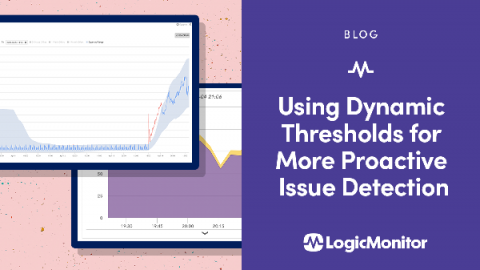
Using Dynamic Thresholds for More Proactive Issue Detection

Have you ever been paged for a critical issue and started troubleshooting only to find an obvious drop in requests that weren’t caught by a static threshold? Or a significant increase in a metric that didn’t cross a static threshold? Or even, evidence of warning alerts triggered long ago that should have enabled someone to resolve the issue and prevent it from causing business impact, but instead was ignored in the massive alert volume received by the team?

Kibana Settings: Spaces, Export Dashboard, and more

Kibana is considered the “window” to Elasticsearch and indeed it’s a powerful UI for searching, filtering, analyzing, and visualizing Elasticsearch data, but Kibana settings are also used to configure, administer and monitor the Elasticsearch cluster. In this lesson, we’re going to explore how Kibana settings can be tweaked for collaborative teamwork. Without further ado let’s jump right into spaces!

Managing Docker Logs with ELK and Fluentd

This article provides an overview of managing and analyzing Docker logs and explores some of the complexities that may arise when looking through the log data. We will go through the default logging approach, as well as look at some more advanced configurations that will make diagnosing issues in your Docker-hosted applications much easier going forward.

Prometheus vs Nagios

Production environment stability and high availability are the holy grail of every SaaS company. R&D organizations put a lot of effort into achieving these goals by implementing different monitoring and alert methodologies and by utilizing a variety of systems and tools. Mean-time-to-detect (MTTD) and mean-time-to-repair (MTTR) are two crucial KPIs that help R&D management personnel determine the efficiency and proficiency of their teams’ responses to production incidents.

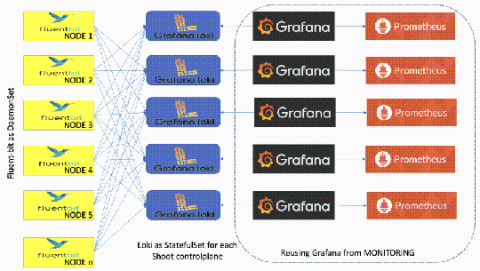
Gardener, SAP's Kubernetes-as-a-service open source project, is moving its logging stack to Loki

Kristian Zhelyazkov is a developer at SAP working on Gardener, the SAP-driven Kubernetes-as-a-service open source project. In this guest blog post, he explains why the project is moving its logging stack to Loki.

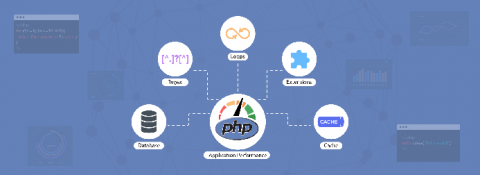
A developer's guide to optimizing PHP performance

With its open-source nature, PHP has evolved into one of the most popular languages among web developers. According to w3techs, 78 percent of websites across the globe use PHP as their server-side language. Even amongst the top 1,000 ranked sites, PHP is dominant, being used by more than 50 percent of them.

Derek Saves the Day with Network Monitoring

Network Monitoring solutions, much like the diagnostic and surgical tools of a medical professional, make it easier for the IT team to discover and locate devices installed within the network or operated via the cloud. These systems make it easier for the IT operations team to understand the ongoing issues in real-time, as and when they occur. Whether it is uptime, disk space, or any other performance issues.

How to protect your IT infrastructure from a Maze ransomware attack

Pitney Bowes, a global package delivery giant, has been hit by a second ransomware attack in less than seven months, according to ZDNet. Those responsible for the attack have released screenshots portraying directory listings from inside the company’s network. What is Maze ransomware and what makes it so special?

Using Observability as a Proxy for Customer Happiness

Today, users and customers are driven by response rates to their online requests. It’s no longer good enough to just have a request run to completion, it also has to fit within the perceived limits of “fast enough”. Yet, as we continue to build cloud-native applications with microservice architectures, driven by container orchestration like Kubernetes in public clouds, we need to understand the behavior of our system across all aspects, not just one.