Operations | Monitoring | ITSM | DevOps | Cloud

Crash Course on AWS CDK and Serverless with REST API and Data Lake Analytical Querying

This is a hands-on course on how to deploy a fully Serverless web app using the AWS CDK. You can use the resources declared in this demo application as a starting point to mix and adapt to your own architectures later, which should save you quite some time.
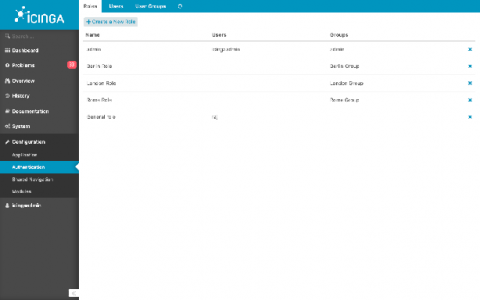
Icinga Web permissions and restrictions (how do they work, examples)

Permissions and restrictions are something used to control how much access is provided to a particular user or user group. Therefore one must first understand what is the role of a user or a group. Here, you will understand permissions and restrictions through configuring users, user groups and roles. They can either be created using configuration files or web interface. When the Icinga Web 2 is installed a default user with admin access is configured.

Configuring Flowmon Using Presets

Nobody wants to spend hours configuring a product. It should just work. Flowmon’s customers, partners, and distributors are fortunate in having a number of presets at their disposal for speedy configuration, whether during initial deployment, adjusting the product to new circumstances, or a quick product demonstration. There is no laborious setup; the user just chooses a use case, follows a few guided steps, and lets the system set everything up.

How to Cohesively Execute Change and Release Management

Strategic changes and new deployments in all growing businesses are expected. So by design, businesses need to be adaptive to new changes. When such transformations are being undertaken, organizations need to continue preserving their infrastructures while complying with pre-defined timelines. To efficiently manage such deployments, organizations make use of ITIL concepts like change and release management.

How the Cortex and Thanos projects collaborate to make scaling Prometheus better for all

Cortex and Thanos are two brilliant solutions to scale out Prometheus, and many companies are now running them in production at scale. These two projects, both in the CNCF Sandbox, initially started with different technical approaches and philosophies: Cortex has been designed for scalability and high performances since day zero, while Thanos was originally focused on operational simplicity and cost-effectiveness.

The case for boring tech

Solutions for challenging technical problems shouldn’t result in a whole set of new ones. Sometimes, we make things harder on ourselves by choosing the new hotness to tackle technical problems (such as scaling infrastructure). We may be solving our problem in an interesting and fun way, but we bring on more complexity (and more problems) as a result of that technology choice.

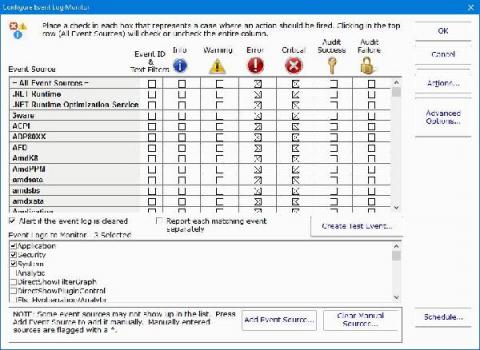
Server Monitoring and Alerts - Getting Past Common Obstacles

Keeping a server running optimally on a consistent basis involves managing multiple system elements simultaneously. Automated scripts and specialized software can handle the tasks your server needs to complete on a daily basis—but when one of these experiences an error, it can throw the entire system off.

Kubernetes observability tutorial: Monitoring application performance with Elastic APM

This post is the third in our Kubernetes observability tutorial series, where we explore how you can monitor all aspects of your applications running in Kubernetes, including: We’ll discuss using Elastic Observability to perform application performance monitoring (APM) with the Elastic APM.

Advanced Network Monitoring with Pandora FMS

Pandora FMS has become well known as a reliable, flexible advanced network monitoring solution. It allows businesses of all sizes to monitor and manage network and hardware issues in real time, and integrates all of the monitored terminals, servers, and other entities into a centralized system. These features mean that Pandora FMS has become the go-to choice for small businesses looking to deploy advanced network monitoring technologies for the first time.