Operations | Monitoring | ITSM | DevOps | Cloud

Using Dynamic Thresholding to Monitor Your Cloud Platforms

Whether you are new to the Cloud, mid-transition, or a professional at cloud or hybrid systems, no one likes being bothered with useless alerts. The options are simple: If you take the approach of ignoring the alert like a bad cold-call, you risk the chance of missing a critical alert and watching your system crash around you. No one likes to open their inbox to a few hundred alerts they have been ignoring.
How to Test Ruby Code That Depends on External APIs

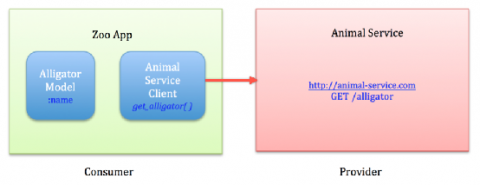
Few things are more frustrating than slow, flaky test suites. You're ready to deploy, wait 20 minutes for CI to run, only to find that a test failure in code you've never touched is blocking you. You dig into the source and find the problem: an external API call. It works (slowly) most of the time. But sometimes the network glitches and it fails. What do you do? In this article, José Manuel shows us several techniques for removing external API dependencies from our tests.

How Uptime.com can Help Improve Internal Documentation

An acquaintance of mine works for a company that still uses Windows XP to manage some internal applications. The higher ups of the company refuse to adopt the new versions, given costs and technical gaps, and it’s created something of a Pandora’s box for employee turnover. With no strong internal reference documentation, each new departure leaves IT wondering two things. This rather amusing conundrum is apparently not an isolated incident.

Website Monitoring: Best Practices

In theory, the default monitoring check settings should work in the majority of cases. However, everyday practice shows that our case does not belong to this majority. Therefore, it is necessary and worthwhile to dedicate some time to the optimal configuration of monitoring. It is also important to properly prepare the monitored website and the organization itself.

Asynchronous CSV Exports with Discover

For as long as we can remember, Sentry has had some version of CSV Exports. They’ve been limited only 1000 rows of results, which did the job for the most part. However, the more you used Sentry, the more we found that limit wasn’t good enough. What if I told you there was a way to get all your data in the exports in a single CSV? That’s right, no more DIY python scripts. No more manually piecing CSVs together. No more feature-request tickets.

How to stream Graphite metrics to Grafana Cloud using carbon-relay-ng

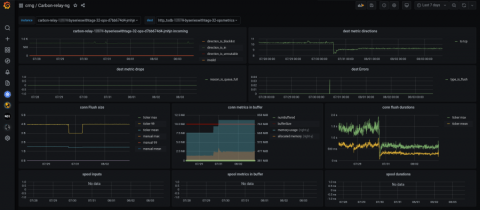
In this post we’ll show how you can easily ship your existing Graphite metrics to Grafana’s managed metric offering using carbon-relay-ng. Carbon-relay-ng is a fast, go-based carbon-relay replacement that allows you to easily aggregate, filter and route your Graphite metrics. This post assumes you have a local carbon-relay-ng binary. You can download carbon-relay-ng binaries from the releases page and find documentation on Docker images, Linux packages, and how to build it yourself here.

Java Logging Best Practices: 10+ Tips You Should Know to Get the Most Out of Your Logs

Having visibility into your Java application is crucial for understanding how it works right now, how it worked some time in the past and increasing your understanding of how it might work in the future. More often than not, analyzing logs is the fastest way to detect what went wrong, thus making logging in Java critical to ensuring the performance and health of your app, as well as minimizing and reducing any downtime.

How Capgemini Solved Multi-Cloud Observability on Heroku/Salesforce

The modern enterprise has expanded its reach by using the power of cloud computing. However, with that power comes complexity in leveraging the multiple platforms needed to provide rich functionality. To achieve a seamless integration that involves multiple cloud infrastructures you need insightful and actionable data. You also need the right team to bring the clouds together in a seamless, effective, and efficient manner.