Operations | Monitoring | ITSM | DevOps | Cloud

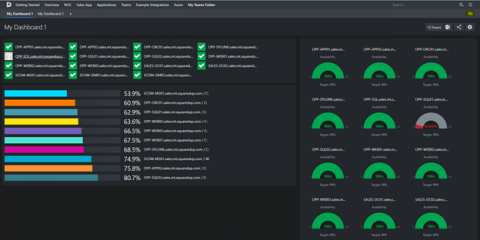
Control access with Teams Folders

If you work in monitoring, you know how important it is for the right people to see the right data. Too much irrelevant data creates a flurry of alerts that hinders productivity, and missing out on key data leads to visibility issues. Worst of all is when you get the wrong people tinkering with data that belongs to other teams.


Kubernetes Namespaces: A Practical Guide

Kubernetes namespaces enable you to organize cluster objects, such as applications, devices and variables. Once you define namespaces, you can use this classification to filter, group and manage objects. You can use the same namespaces in duplicated environments and apply policies to specific clusters segments. Kubernetes namespaces are also important for defining roles and ensuring proper access configuration. If you're monitoring Kubernetes, you should try out MetricFire.

Support for Database Performance Monitoring in Node

Performance monitoring is great because it lets you see whether your application is fast or slow, and which parts need speeding up. For Node developers, those “parts” are most often endpoints handling incoming requests. Since the introduction of our performance monitoring offering in July 2020, Node devs have been able to use the Sentry SDK, @sentry/node, to measure the total time it takes to process each request, but we made some significant improvements since then.

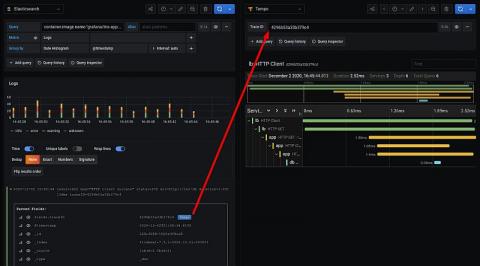
How to find traces in Tempo with Elasticsearch and Grafana

Grafana Tempo, the recently announced distributed tracing backend, relies on integrations with other data sources for trace discovery. Tempo’s job is to store massive amounts of traces, place them in object storage, and retrieve them by ID. Logs and other data sources allow users to quickly and more powerfully jump directly to traces than ever before. Previously we investigated discovering traces with Loki and exemplars.

Kibana Canvas: An In-Depth Guide

When we look at information, numbers, percentages, statistics, we tend to have an easier time understanding and interpreting them if they’re also represented by corresponding visual cues. Kibana Canvas is a tool that helps us present our Elasticsearch data with infographic-like dashboards – fully visual, dynamic, and live.

Best Practices for Logging in Kotlin

If you’re reading this, you have probably been convinced that taking on Kotlin for your mobile application is the most sensible choice. Now that you’ve come to this decision, it’s imperative to know what you need to do to stay on top of your monitoring and logging. Like with any application or system, they are essential, cornerstone qualities of any successful project.

Five worthy reads: Hyperscale: The path ahead for data centers and organizations

Five worthy reads is a regular column on five noteworthy items we’ve discovered while researching trending and timeless topics. In this edition, we’ll learn about hyperscale data centers, including how they function, and the considerations and challenges organization face in deploying them.

The latest Nexthink Release is All About Proactive IT

The latest Nexthink release has rolled out, with a wide range of features to support the ongoing Nexthink mission – driving proactive, continuous management of digital employee experience across your entire estate. Our recent focus has been on building out virtualization support in the platform, continuing to enhance optimization of management workflows, and making employee engagement more powerful and accessible than ever before. Let’s take a deeper look at what’s new!

Best website load testing services

Website load testing services determine how websites deal with online traffic. Too often, people equate it with performance testing. However, load testing is just a type of website performance testing. Other types of performance testing include endurance testing, volume testing, scalability testing, spike testing, and stress testing. In website deployment, it is common that transactions may fail and systems crash. It is due to concurrent demands on the website and adjustment over resources.