Operations | Monitoring | ITSM | DevOps | Cloud

Using Microsoft's New Network Connectivity Insights Tools

Microsoft’s new network insights tools – recently released as a preview – provides an overview of connectivity to your tenant and gathers information from the new Microsoft 365 network. These previews make it easier for administrators to better understand potential problems and whether users have good or bad connectivity to the service.


Beginner's Guide to Jaeger + OpenTracing Instrumentation for Go

This post aims to provide a very simple beginner’s guide to Jaeger + OpenTracing instrumentation for Go applications (the terms “application” and “service” is used interchangeably in this document) via a working example. If you are new to instrumentation, I recommend that you first read this post for a practical introduction to instrumentation for Jaeger and OpenTracing. You can also get more info on using logs in Go.

Python Memory Management: The Essential Guide

Python is not known to be a "fast" programming language. However, according to the 2020 Stack Overflow Developer Survey results, Python is the 2nd most popular programming language behind JavaScript (as you may have guessed). This is largely due to its super friendly syntax and its applicability for just about any purpose.

Why You Should Monitor Your GCP Infrastructure

Google Cloud Platform (GCP) is a crowd favorite of both developers and large enterprise consumers. While some smaller GCP services occasionally shut down with little warning, the main GCP services continue to grow in both adoption and functionality. Monitoring and understanding GCP usage across an organization becomes more complex as the organization grows and functionality increases.

What's the best way to create ServiceNow Incidents from SCOM?

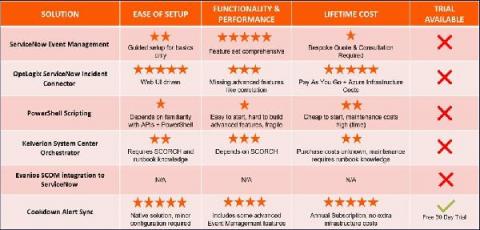
If you have ServiceNow and SCOM you will want to integrate these tools to ensure they deliver maximum value for your business. There are four key benefits of creating ServiceNow incidents from SCOM: 1) Increase value of existing infrastructure monitoring tools by consolidating information and integrating them with connectors. 2) Understand root cause of the problem and reduce Mean Time to Repair (MTTR) by transforming incidents into actionable alerts.

Alert Sync 2.0 is here!

Alert Sync converts critical Alerts into actionable Incidents using real-time, two-way synchronization. This seamless integration of SCOM and ServiceNow, creates the perfect partnership between Alerts & Incidents, so you can successfully manage them throughout the lifetime of an issue. Gone are the days of scripting, we've baked all this into our new features, saving you time & optimizing incident management, with our cool new features.

Tutorial: Monitoring Your Core Web Vitals

Web performance used to be easy. You’d time how long a page takes to load, easy. But the rise of client-side JavaScript has introduced bold new ways for websites to be frustratingly slow. Measuring this new slowness will take new metrics. Google calls them the Core Web Vitals. Each of the Core Web Vitals measures a different aspect of how a web application responds. This post will take a look at each of these metrics, what they measure, and how to use them.

How Hacker News Crushed DavidWalshBlog

Earlier this month, David’s heartfelt posting about leaving Mozilla made the front page of Hacker News. Traffic increased by 800% to his already-busy website, which slowed and eventually failed under the pressure. Request Metrics monitors performance and uptime for David’s blog, and our metrics tell an interesting story. Here’s what happened, why, and what you can do to prepare your site for traffic surges.

Splunk Infrastructure Monitoring is AWS Outposts Ready

We are excited to announce that Splunk Infrastructure Monitoring has achieved Outposts Ready designation. This designation recognizes that Splunk provides proven solutions for customers to build, manage and run hybrid cloud applications. AWS Outposts Ready designation establishes Splunk as an AWS Partner Network (APN) member that provides validated integrations with a specific focus on observability and monitoring of AWS Outposts deployments.