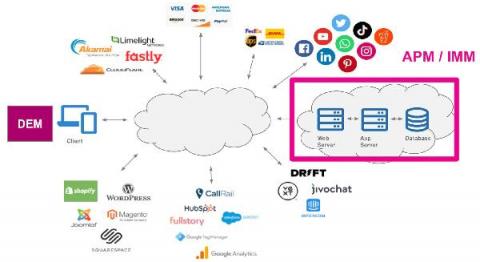
On Tuesday June 8th, the Content Delivery Network Fastly experienced an outage that made large swaths of the web unavailable for nearly an hour. To focus on the positive, this outage can serve as a wakeup call for Observability teams, because it shows how much modern sites depend on resources beyond their immediate control, and how hard it is to "observe" these kinds of issues with an incomplete Observability mindset.
Real-time processing provides a notable advantage over batch processing — data becomes available to consumers faster. In the traditional ETL, you would not be able to analyze events from today until tomorrow’s nightly jobs would finish. These days, many businesses rely on data being available within minutes, seconds, or even milliseconds. With streaming technologies, we no longer need to wait for scheduled batch jobs to see new data events.
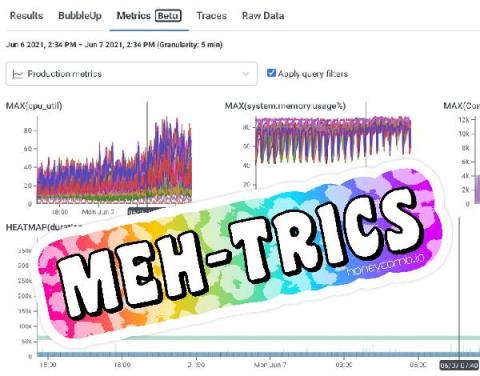
Today at o11ycon+hnycon—right now, actually, if you’re reading this blog when it was posted—we’re announcing several new Honeycomb features during the keynote. Our industry and community have come a long way since we burst onto the scene, and I’m delighted to give you another version of Honeycomb that continues to demonstrate what’s possible with observability. And it includes metrics.
We've recently launched a brand new in-browser editor for our browser check creation experience! Browser checks are Javascript-powered Playwright/Puppeteer scripts that run on deploy or on a schedule for testing and monitoring websites and web apps. While this new experience centers around an upgraded text editor, it is much more than just that.The new browser check creation experience builds on the popular Monaco editor from Microsoft, which also powers VS Code under the hood.
After months of developing and testing, we are finally ready to announce the release of our Icinga for Windows Hyper-V and Cluster plugins version v1.0 today! We collected lots of feedback, tested different approaches and re-designed some plugins to ensure we can provide good monitoring basics for these environments, allowing us to improve and extend them in the future.
Smartsheet was founded in 2005 with the mission of helping companies simplify and streamline how work is managed. Over three quarters of the Fortune 500 rely on Smartsheet. Through its enterprise platform for dynamic work, the platform aligns people and technology to help businesses move faster, drive innovation, and achieve more.
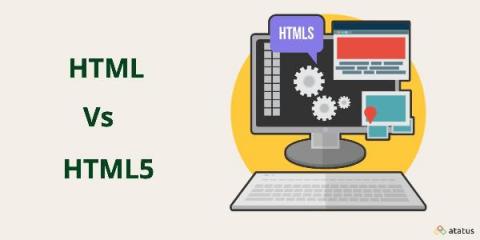
Hypertext Markup Language (HTML) is the basic language for creating websites. Since its introduction in the late 1980s, HTML, like anything else in the tech world, has grown tremendously. Many that are new to coding should become acquainted with HTML5, the most recent version. However, having a detailed understanding of the language's evolution will provide insight into the past, current, and future of web creation for both new and experienced coders.
As you could probably tell from the title, we shipped an SDK for Next.js. This means you can capture errors, measure performance, manage releases, configure suspect commits, and automatically upload sourcemaps to view unminified JavaScript and TypeScript with zero(-ish) configuration. Why was Next.js next on our list? Well, it’s one of the fastest-growing React frameworks and developers love it.