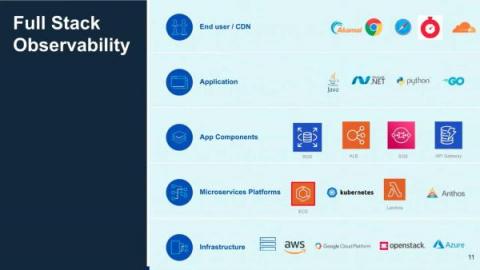
Achieving full, 360-degree observability across your entire IT ecosystem and application components can be thwarted by the disconnect between technical monitoring and business outcomes - running the risk of catastrophic service failures.
Built on the V8 JavaScript engine of Chrome, Node.js is a very lightweight, open-source framework with minimum modules. And since it is an asynchronous system by default, it is faster than most other frameworks. DevOps still need Node.js monitoring to ensure performance better than other frameworks. In order to understand how relevant Node.js still is, note that PayPal, Reddit, LinkedIn, Amazon, Netflix and other high-use, high-visibility service providers use the framework.
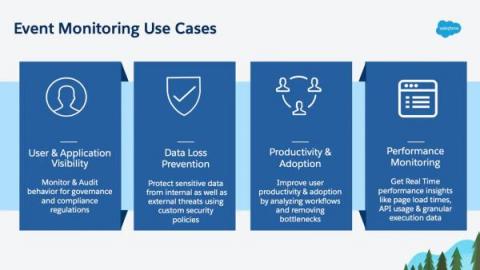
In 2019 Salesforce announced the general availability of Real-Time Event Monitoring (RTEM) which includes 19 different events that help monitor & secure your Salesforce data. Real-Time Event Monitoring stores events for 6 months as Salesforce Big Objects and streams events via Salesforce’s Streaming API in near real-time.
Operational monitoring can be like looking down the wrong end of a telescope. There’s no clear picture of the horizon. Everything is blurred, indistinct, and difficult to trace. If you’re relying on traditional, domain-centric monitoring, you’re faced with a similar problem: you can see the performance of individual elements, but you don’t have any visibility into the broader picture.
The OpsRamp Monitor captures the latest buzz around what’s trending in the world of ITOps and related technology, and October saw some significant news, including Facebook’s unprecedented outage. Let’s dig in.
The cloud is today one of the most expensive resources for any modern organization, second only to employee salaries and overhead. According to recent research by Gartner, end-user spending on public cloud services will reach $396 billion in 2021 and grow 21.7% to reach $482 billion in 2022. By 2026, Gartner predicts public cloud spending will exceed 45% of all enterprise IT spending, up from less than 17% in 2021.
When you send telemetry into Honeycomb, our infrastructure needs to buffer your data before processing it in our “retriever” columnar storage database. For the entirety of Honeycomb’s existence, we have used Apache Kafka to perform this buffering function in our observability pipeline.