Operations | Monitoring | ITSM | DevOps | Cloud

Extend Datadog RUM and Product Analytics to Shopify and Salesforce

Many revenue-critical interactions, such as ecommerce checkouts and customer portals, run on Shopify and Salesforce. But engineering teams have less control over the frontend runtime on these platforms, and this lack of control can make user monitoring difficult to implement and maintain. These monitoring limitations can leave gaps in visibility across important parts of the user journey.

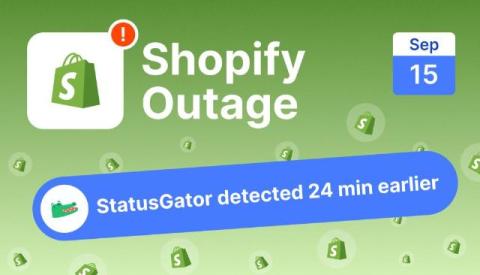
Shopify admin outage on September 15, 2026: merchants locked out, and how StatusGator caught it early

Shopify’s admin dashboard went down for merchants around the world on September 15, 2026, leaving store owners unable to log in or reach their orders, products, and settings while many storefronts kept running. StatusGator sent an Early Warning Signal at 09:25 UTC, 24 minutes before Shopify publicly acknowledged the incident on its status page at 09:49 UTC. The disruption lasted about four hours.

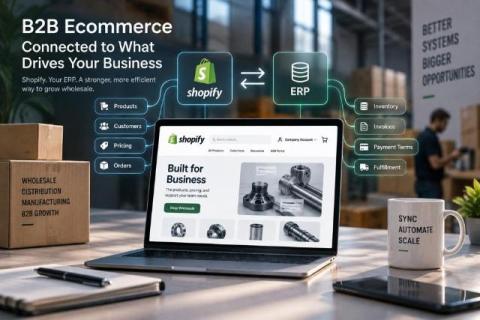
Top Shopify Agencies for B2B ERP Integrations in 2026

For manufacturers, distributors, wholesalers, and other B2B businesses, a Shopify implementation often depends as much on back-office systems as it does on the storefront. An ERP may remain responsible for inventory, product information, customer accounts, pricing, payment terms, orders, invoices, or fulfillment. If Shopify and the ERP operate independently, teams can end up re-entering orders, correcting inventory, reconciling pricing, and manually updating customer records.

CRM API Rate Limits: What Developers Need to Know Before They Build

Every CRM integration starts the same way. You write some code, test it against a sandbox account with a few hundred contacts, and everything works beautifully. Then you push to production, where the account has 50,000 records and three other integrations pulling data at the same time, and suddenly you're drowning in 429 errors.

How Startups Can Avoid the Very Common CRM Regret

Most founders don't spend a lot of time choosing their first CRM. There's too much else going on. Someone on the team suggests a tool they've used before, a few demos happen in the same week, and the decision gets made in a couple of days. Fast forward a year, and that CRM is either half-empty or so over-customised that nobody trusts the data in it.

What SREs Can Learn from Revenue Operations (and Vice Versa)

Site reliability engineers and revenue operations teams rarely sit at the same desk. Software engineers look after cloud infrastructure while operations professionals look after data pipelines and sales funnels. Yet both teams spend their days managing complex systems that can't afford to crash. When you look past the different tools they use, the underlying principles of both roles are almost identical. Let's examine how these two technical worlds can share practical insights to build better business systems.

How to Save 6 Hours Weekly with Stripe Salesforce Integration

Growth creates opportunities, but it also exposes inefficiencies. Consider an organization preparing for a major expansion. More customers are expected to join, transaction volumes are increasing, and multiple teams will need access to the same customer and payment information. Existing processes may seem manageable today, but growth often reveals a challenge that many organizations overlook: critical data is spread across multiple systems.

Leading Salesforce Partners in Australia You Can Trust

Australia's Salesforce ecosystem has matured substantially over the past decade. What was once a relatively narrow market of CRM implementers now includes specialist consultancies, managed-service providers, integration firms, marketing technology agencies, and digital transformation advisers.

Why Lenders Are Turning to Salesforce for Lending Automation

Lenders are under steady pressure to approve strong borrowers sooner, document every decision, and keep service teams informed. Many still rely on aging systems that separate applications, credit notes, payments, and borrower messages. That split creates delays and avoidable errors. Salesforce gives lending teams one operating layer for data, tasks, approvals, and communication, making routine work easier to track and manage.

How CRM Systems Help Businesses Scale Efficiently

As businesses grow, managing customer relationships becomes increasingly complex. What once worked with spreadsheets, emails, and disconnected software quickly becomes inefficient as the number of clients, leads, and daily interactions increases. To remain competitive, companies need a centralized system that helps organize information, automate workflows, and improve collaboration across departments.