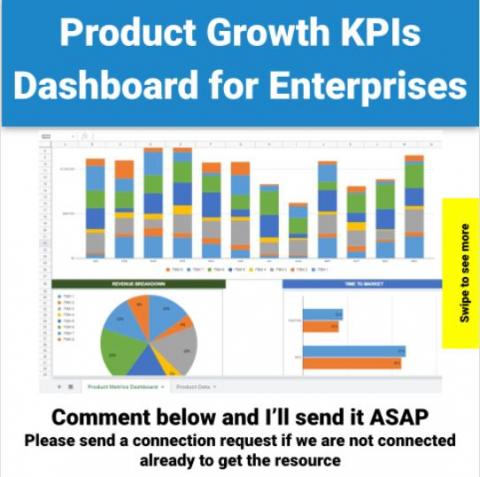
There can be as many as 64 important business metrics for your company to track (according to nTask). That can sound daunting. But if your organization doesn’t have the capacity to track all of them, it should at least track the most important ones according to its business model, stage and focus areas. For example, key product metrics not only provide information to product managers, but also other relevant stakeholders across the organization.
Logz.io has dedicated itself to encouraging and supporting cloud-native development. That has meant doubling down on support for AWS and Azure, but also increasing our tie-ins with Google Cloud Platform – GCP. Recently, our team added dozens of new integrations for metrics covering the gamut of products in the GCP ecosystem.
Life for an IT architect in retail would be so much easier if people would just spread their shopping out across the year. Since 1941 American Thanksgiving has been a holiday on the fourth Thursday of November and most American companies and schools take the following day as a holiday too with major retailers offering price reductions on this day to kick start the Christmas shopping season. Since 2005 it has been the busiest shopping day of the year.
When you’re a sports betting technology company and you realize your in-house, on-prem Graphite solution for monitoring metrics is no longer a sure-thing, what do you do? That was the dilemma at Kambi, a quickly growing business – with a passion for using open source technology – that has about 500 different micro services in production and around 200,000 incoming metrics messages per second.
As we speak, there are likely thousands of organizations running some type of monitoring solution out there, each within unique operational structures, but the difference between those that that are successful and those that are not can be attributed to 4 root causes. Not surprisingly, these 4 root causes apply to any toolset or technology used. That’s largely due to the likelihood that the best tools in the world used poorly will deliver poor results.
AWS Fargate is a serverless compute engine that allows you to deploy containerized applications with services such as Amazon ECS without needing to manage the underlying virtual machines. Deploying with Fargate removes operational overhead and lowers costs by enabling your infrastructure to dynamically scale to meet demand. We are proud to partner with AWS for its launch of support for AWS Fargate on Windows containers.
Kubernetes management can be daunting for developers who don’t have specialized understanding of the orchestration technology. Learning Kubernetes takes practice and time, a precious commodity for devs who are under pressure to deliver new applications. This post provides direction on what you need to know and what you can skip to take advantage of Kubernetes. Let’s start with five things you need to know.
There was a time when standing up a website or application was simple and straightforward and not the complex networks they are today. Web developers or administrators did not have to worry or even consider the complexity of distributed systems of today. The recipe was straightforward. Do you have a database? Check. Do you have a web server? Check. Great, your system was ready to be deployed.