Operations | Monitoring | ITSM | DevOps | Cloud

The latest News and Information on Monitoring for Websites, Applications, APIs, Infrastructure, and other technologies.

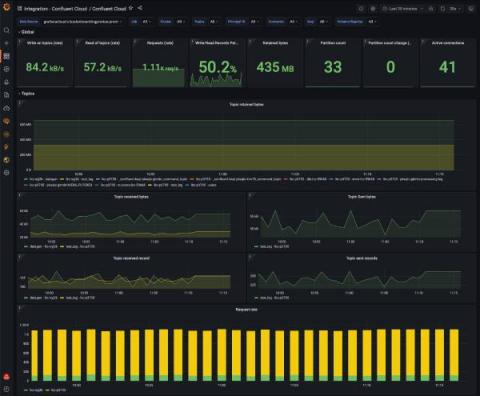
Introducing the new Confluent Cloud integration for Grafana Cloud

At Grafana Labs, we’re continuing to expand our platform of Grafana Cloud integrations that make it easier than ever to connect and monitor external systems. These integrations enable you to answer the big picture questions in your organization and tell your observability story.

CI/CD & DevOps Pipeline Analytics: A Primer

Tracking application-level and infrastructure-level metrics is part of what it takes to deliver software successfully. These metrics provide deep visibility into application environments, allowing teams to home in on performance issues that arise from within applications or infrastructure. What application and infrastructure metrics can’t deliver, however — at least not on their own — is breadth.

Kubernetes Incident Response Best Practices

Inevitably, organizations that use technology (regardless of the extent) will have something, somewhere, go wrong. The key to a successful organization is to have the tools and processes in place to handle these incidents and get systems restored in a repeatable and reliable way in as little time as possible.

13 Best Performance Monitoring Tools for Java

The Java programming language is simple to learn and use, and it is frequently used by web developers to create applications. However, monitoring the performance of a Java-based application might be difficult because it is not a simple process. Implementing multiple monitoring tools to track Java logs, metrics, infrastructure data, and other operational factors is necessary for troubleshooting inefficiencies.

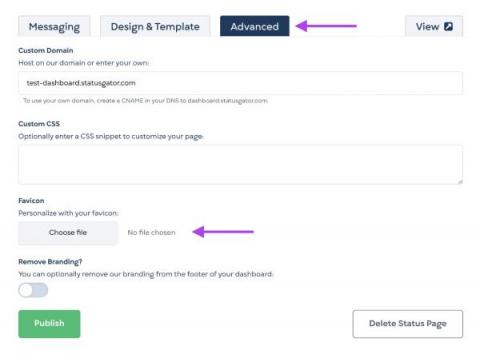
Status Pages Now Have Favicons

It’s no secret, we love favicons (short for “favorites icon”) here at StatusGator. Our aggregated status dashboards and status pages feature the favicons of all the services you depend on, aiding in recognition. Favicons are shown when you bookmark, or add a site to your favorites. And, more importantly, they are shown in the tabs of your browser. Now, your own StatusGator aggregated status page can have a custom favicon, too!

How Nexthink Experience Complements Unified Endpoint Management

I’ve worked in IT for over 20 years and specifically in End User Computing (EUC) for the last 10 years, notably working for Citrix and Dell Technologies. I want to share with you what some of the key differences are from a Unified Endpoint Management (UEM) platform and a Digital Employee Experience (DEX) platform (such as Nexthink Experience), and how they complement one another, and where there is overlap.

Is it DDOS or is it you?

Server load can tell you a lot about your day-to-day user traffic. A sudden spike in server traffic can indicate an attack, but that’s not always the case. As website and performance monitoring become more mainstream, and you add a wider variety of backend testing and web monitoring checks to your infrastructure – you have to ask the question – Is that spike in server traffic DDOS? Or is it me…

CNCF Live: Power up your machine learning - Automated anomaly detection

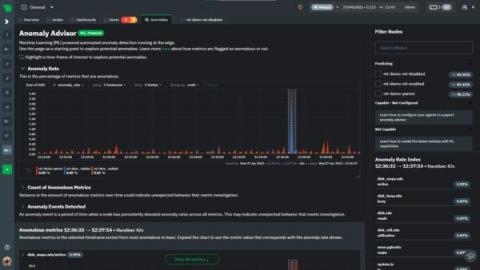
Our Analytics & ML lead Andrew Maguire recently had a chance to share our new Anomaly Advisor feature with the wider CNCF community. In his demonstration he did some light chaos engineering (using Gremlin and stress-ng) to generate some real anomalies on his infrastructure and watch how it all played out in the Anomaly Advisor in Netdata Cloud. There were also some great questions and discussion from the audience around ML in general and in the observability space itself.

Apache Kafka Consumer Lag Monitoring

The world lives by processing the data. Humans process the data – each sound we hear, each picture we see – everything is data for our brain. The same goes for modern applications and algorithms – the data is the fuel that allows them to function and provide useful features. Even though such thinking is not new, what is new in recent years is the requirement of near-real-time processing of large quantities of events processed by our systems.

The Great Resignation - What's at Stake for IT?

Roughly 47.4 million people quit their jobs and left the workforce last year in search of better ones, leading to what we now call the Great Resignation. Then, as the economy re-opened and companies intensified hiring efforts, millions of people switched careers, searching for better working conditions and higher salaries. Experts say the trend will continue as the Gen Z population reshapes the labor market.