Operations | Monitoring | ITSM | DevOps | Cloud

The latest News and Information on DevOps, CI/CD, Automation and related technologies.

How to audit Node.js modules

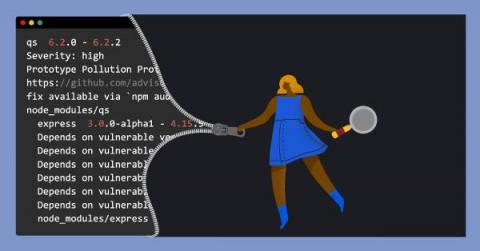
Node.js is one of the best and most widely used Javascript runtimes used for building APIs. But, this popularity status has led to many hackers distributing insecure modules that exploit the Node.js application or provide a weak point for exploitation. In this tutorial, you will learn how to audit Node.js modules and also detect vulnerabilities in modules using npm audit.


How to review your CircleCI configuration

Configuration files can take some time to set up, but after that initial push they are easy to forget about. “If it’s not broken, don’t fix it” is a common approach that many developers take with their configuration files. But when it comes to your continuous integration pipelines, small changes can have huge benefits.

Calling all Reliability Practitioners: Participate in the 2022 SRE Survey

For the past four years, Catchpoint and various partners have been running a yearly SRE Survey. This year, Blameless is excited to partner with Catchpoint for the fifth annual survey. We want to hear from you if you are in a DevOps or SRE role or even if you work on reliability with some other title or role. There are tremendous, valuable learnings when we listen closely to practitioners.

5 Simple Steps To Migrate From Heroku to AWS

While Heroku is ideal for startups because it provides tremendous simplicity and time-saving; Still, when your application starts growing and its architecture becomes complex, challenges related to DevOps, data security, and scalability begin to jump in. That’s where AWS takes over to overcome these limitations. In this article, we will walk you through exactly how to migrate your applications from Heroku to AWS in 5 simple steps with Qovery.

Your First Shipa Canary Deployment(s)

Lineage to the saying “canary in a coal mine”, the canary deployment/release methodology is an incremental release focused on safety. If the canary does not pass, the deployment does not continue or is rolled back. Taking a jog down memory lane, like Kubernetes the Hard Way, a few years ago a canary deployment in Kubernetes was quite the undertaking.