Mailchimp
Not subscribed to OpsMatters Newsletter


Amazon Web Services Elasticsearch Service enables an organization to deploy, secure, and run their Elasticsearch clusters. AWS Elasticsearch is a cost-effective way to operate at scale. In this article, we will cover.
Since the beginning, Sentry has adopted SemVer (semantic versioning) for all of its open source releases — major versions indicated breaking, backward-incompatible changes; minor versions meant new features, and patch releases were bug fixes only. This process worked fine for a long time. As the open source project evolved and grew into Sentry.io – our SaaS offering – the development team switched to a continuous delivery model.
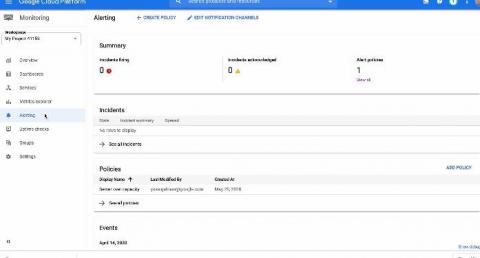
Around the world, operations teams are working to automate their monitoring and alerting workflows, looking to reduce the time they spend on rote operational work (what we call “toil”), so they can spend more time on valuable work. For instance, Google’s Site Reliability Engineering organization aims to keep toil below 50% of an SRE’s time, freeing them up to work on more impactful engineering projects.
Got the basics down and ready to move on to more advanced aspects of Kusto? You’ve come to the right place! Here you will learn how to use aggregation functions, visualize query results and put your data into context. If you’re just getting started with Kusto, check out our ‘Jumpstart Guide to Kusto’ before starting on this one. Let’s get into it!
In Rancher 2.4, the latest release of Rancher Labs’ open source Kubernetes management platform, you can now manage K3s cluster upgrades from the Rancher UI. K3s is a lightweight Kubernetes distribution from Rancher that you can use to set up your development Kubernetes environment within minutes. It is great for production use cases and is built primarily for IOT and Edge devices. In Rancher 2.4, you can import K3s clusters and can manage the upgrades for it via Rancher itself.
Organizations are increasingly looking to containers and distributed applications to provide the agility and scalability needed to satisfy their clients. While doing so, modern enterprises also need the ability to benchmark their application and be aware of certain metrics in relation to their infrastructure. In this post, I am introducing you to a cloud-native bench-marking tool known as Kubestone.
My first three months as President and CEO of Ribbon have been a whirlwind by any standard. But also satisfying and invigorating. We have huge potential and expectations for our new company as the merger of Ribbon and ECI accelerates, even while managing the impact from the COVID-19 pandemic. Like everyone, we have quickly adapted to the new normal and in many areas are even more productive than before.