Mailchimp
Not subscribed to OpsMatters Newsletter


Mission-focused teams that operate in contingency environments – think military branches, the intelligence community, NASA – increasingly depend on collaboration software. They need to share information quickly, nimbly, and securely. And they want to carry that out in contextual channels that enable them to see the right content at the right time to make informed, accurate decisions.
When we work at it, professionals are pretty good at analysis. We can break down a simple system, look at its parts and their relations, and master it. Given enough time and teammates, we can analyze a very complicated system and fix it when it breaks. But complex systems don’t yield to analysis. We have to add another skill: sense-making. Complex systems have parts that learn and change, with relations that vary with state and history. They respond to and influence their environment.
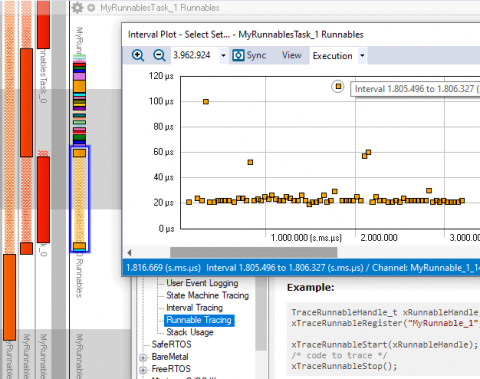
Tracealyzer® version 4.7 in now available for download and evaluation. This is a big feature update with several new capabilities and major improvements.
With a range of network and computing capabilities now offered via the cloud, it can be tricky to keep up. We explain the four core “as a service” offerings and their use cases.
Monitoring Teams Rooms can be challenging for IT teams because it involves keeping track of so many different technologies working together – or not, as the case may be – all at once. This has become increasingly difficult for many businesses over the past few years as workforces become more distributed. But will it always be like that?
Values led culture. Meaningful work. Remote-first environment. Massive growth. A love of Goats. These are just some of the ingredients that make Cribl a place where employees can do their best work. And we’re honored to be recognized by Forbes as one of America’s Best Startup Employers 2023 with a top 10 ranking! Not all awards are created equal, and this recognition by Forbes is particularly meaningful because it’s based on extensive data research and social listening analysis.
This is part two of a three-part blog series on Observability—the challenges and the solutions.