Mailchimp
Not subscribed to OpsMatters Newsletter


Distributed tracing is a powerful technique that allows you to track the flow and timing of requests as they navigate through a system. By linking operations and requests between multiple services, distributed tracing provides valuable insights into system performance and helps identify bottlenecks. In this blog post, we will delve into the benefits of distributed tracing, explore its relevance for various application architectures, and uncover how it operates behind the scenes.
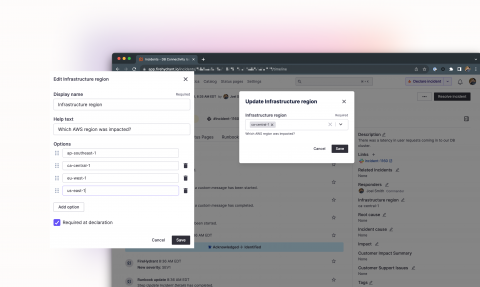
Today we're releasing custom fields, a powerful new feature that empowers you to tailor FireHydrant to your organization's specific needs and capture essential incident details. Custom fields help you track critical states, involved parties, resolution specifics, affected services, messages, and more — almost anything you want! — all aligned with your unique workflows. Regardless of the size of your team or the maturity of your processes, custom fields adapt to your workflow.
Kelverion is invested in the success of our customers fulfilling their IT automation goals. As part of this endeavor, we provide various resources to ensure our customers can implement and manage their IT automation goals with precision and efficiency. Some of our resources include our webinars, blogs, technical discussions, and guides for things such as ‘Best Practices’ or ‘What’s New’ in the field of IT Automation.
In addition to the built-in user authentication that utilizes usernames and passwords, Grafana also provides support for various mechanisms to authenticate users, so you can securely integrate your instance with external identity providers. We are excited to announce that with the release of Grafana 10.0, we have introduced a new user interface that simplifies the configuration of SAML authentication for your Grafana instances.
Did you like our previous blog about domain hijacking? Let’s see if you know all the HTTP codes now. There is a complex series of dialogues happening behind the scenes every time you use the internet. Your browser and servers are always communicating — and while most people don’t understand the internet’s language, it’s definitely essential for developers and SEO experts to understand it.
As mentioned in our ultimate guide to HTTP status codes, the HTTP 999 is unofficial, but it still plays an important role in the flow of our online journey in unexpected ways — and here’s why. So what is it for? We all know that the digital highway is held together by something called the Hypertext Transfer Protocol, or HTTP.
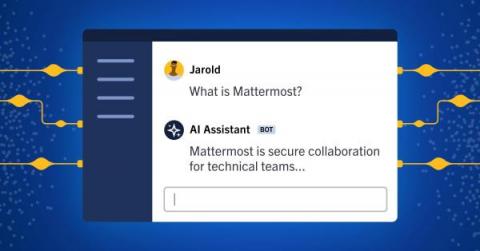
Organizations — particularly those with high security and compliance requirements — need a customizable way to explore and innovate with artificial intelligence and other new technologies. This is why we’re happy to introduce OpenOps, an open source platform designed to help organizations experiment with AI in a secure environment they control. OpenOps is a framework of several tools that enables you to test open source AI models in a sandbox.
Katie Schmidt, senior manager of AI/machine learning user experience research, contributed to this blog. Years of user experience (UX) research and customer feedback have shown that building trust is integral to success with AI. With generative AI (GenAI), trust is more important than ever.